 Save
Save There's something about the smell of ginger hitting hot oil that instantly shifts my mood in the kitchen. My neighbor brought over a bunch of carrots from her garden one autumn afternoon, slightly muddy and ridiculously sweet, and I found myself standing at the stove wondering what would do them justice. This soup emerged almost by accident—a way to honor those carrots while chasing that warming spice I'd been craving as the weather turned cooler. It became my go-to when I needed something that felt both nourishing and a little bit luxurious.
I made this for my partner on a particularly rough Tuesday when nothing felt quite right, and watching them take that first spoonful and visibly relax felt like small kitchen magic. The bright orange color alone seemed to chase away the gray, and we ended up having seconds while talking through what had made the day heavy. That's when I realized this soup had become more than just lunch—it was somehow permission to slow down and actually taste something good.
Ingredients
- Olive oil: A tablespoon creates the foundation for everything else, helping the onions soften and the garlic release its aroma without burning.
- Onion, diced: One medium onion disappears into sweetness as it cooks, becoming almost invisible but absolutely essential to the soup's base.
- Garlic cloves, minced: Just two cloves provide an earthy undertone that grounds all the brightness happening around it.
- Carrots, peeled and sliced: Seven hundred grams of carrots are the star here—slice them into similar sizes so they cook evenly and transform into silky sweetness.
- Fresh ginger, finely grated: Two tablespoons might seem like a lot, but ginger mellows as it cooks, becoming a gentle warmth rather than a sharp bite.
- Vegetable broth: One liter becomes the canvas for everything else, so use broth you'd actually want to sip on its own.
- Coconut milk: The optional cup adds richness and a subtle sweetness that lets the ginger shine through without feeling heavy.
- Sea salt and black pepper: These simple seasonings are your volume controls—taste frequently and adjust until the flavors sing.
- Lemon juice: Half a lemon's worth of juice is the secret that wakes everything up at the very end, adding brightness without tasting citrusy.
Tired of Takeout? 🥡
Get 10 meals you can make faster than delivery arrives. Seriously.
One email. No spam. Unsubscribe anytime.
Instructions
- Warm your oil and soften the onion:
- Heat that tablespoon of olive oil in your pot over medium heat, then add the diced onion and let it sit for three to four minutes, stirring occasionally, until it turns translucent and slightly golden at the edges. You'll know it's ready when the kitchen starts smelling sweet and the pieces have lost their sharp bite.
- Wake up the aromatics:
- Stir in the minced garlic and grated ginger, cooking for just one minute while everything mingles together. This brief moment releases the oils in both and fills your kitchen with an almost spicy fragrance that signals something delicious is underway.
- Introduce the carrots:
- Add your sliced carrots to the pot and cook for another two minutes, stirring now and then so they get coated in that ginger-garlic oil. This seems quick, but you're just getting them acquainted with the pan before the real transformation begins.
- Build the broth and simmer:
- Pour in your vegetable broth, bring everything to a boil, then lower the heat and cover the pot, letting it simmer for twenty to twenty-five minutes until the carrots are so tender they break apart with a spoon. The kitchen becomes steamy and warm, and the aroma deepens into something almost savory.
- Blend to silk:
- Remove from heat and use an immersion blender to puree everything directly in the pot, working in steady pulses until the soup is completely smooth and velvety. If you prefer using a countertop blender, work in batches and be careful with the heat—let the soup cool slightly first.
- Finish with richness and brightness:
- Stir in the coconut milk if you're using it, then add the lemon juice, salt, and pepper, tasting as you go and adjusting until it feels right. Warm it gently for two to three minutes, and you'll notice how the lemon juice somehow makes the ginger more prominent and the whole soup feel more alive.
- Serve with intention:
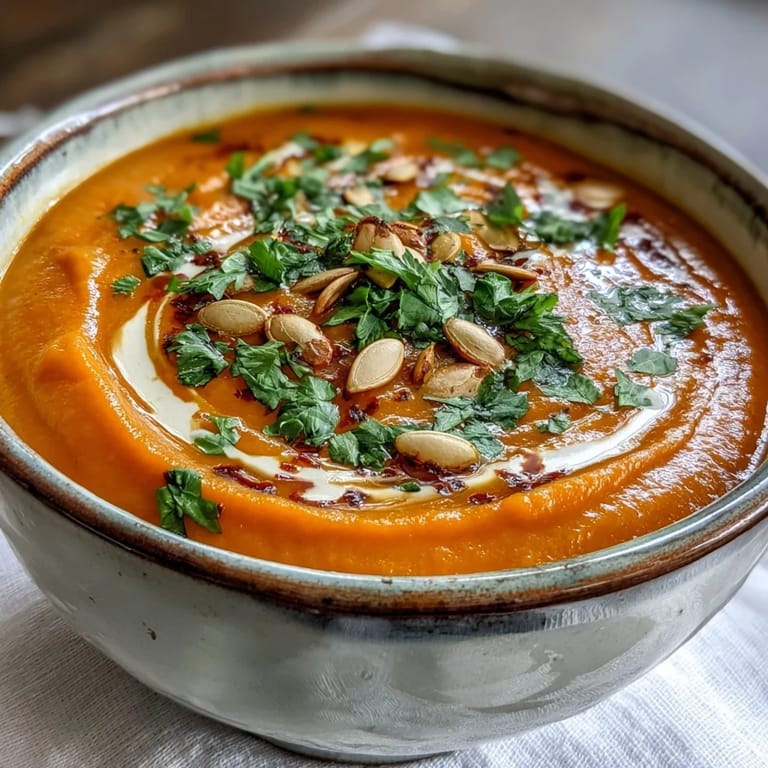
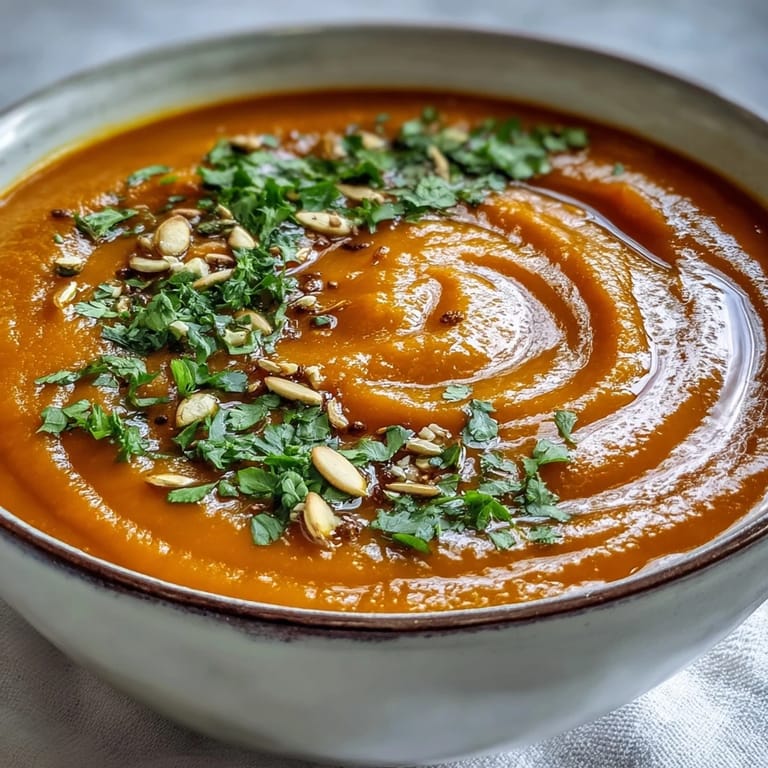
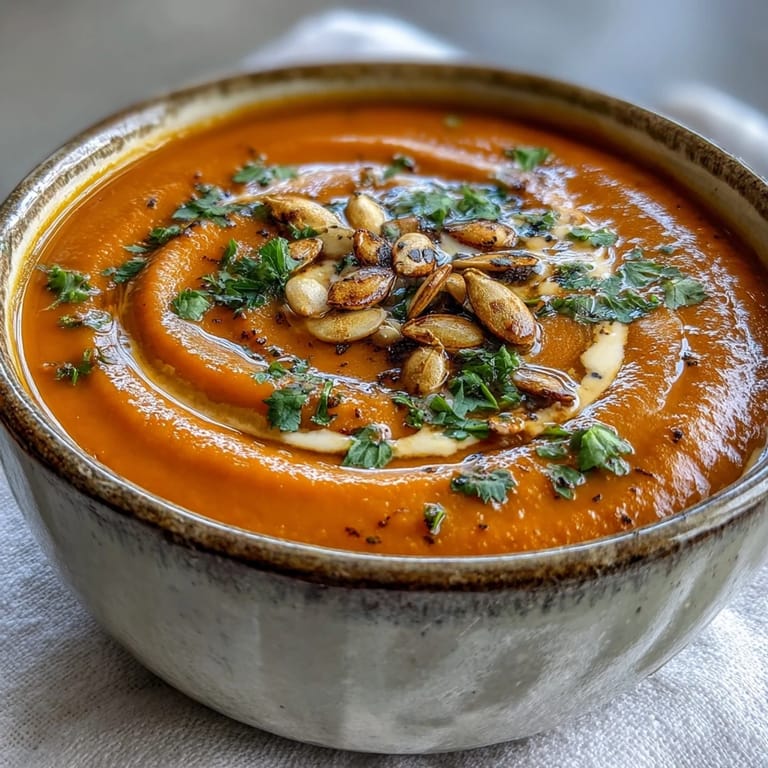
- Ladle the soup into bowls and add whatever garnish calls to you—a drizzle of coconut milk swirled on top, fresh herbs scattered across, or even some toasted pumpkin seeds for texture if you're feeling it.
 Save
Save I've served this to people who swear they don't like ginger, only to watch them ask for the recipe halfway through their bowl. There's something about the way the flavors work together—the natural sweetness of carrot, the gentle heat of ginger, the richness of coconut—that makes people feel understood, like you made exactly what they needed without them having to ask.
When to Lean Into the Coconut
I used to make this soup with coconut milk always, thinking creaminess was the goal. Then one winter I ran out and made it with just the broth, and I realized something valuable: the coconut is there to cushion and complement, not to dominate. On mornings when I want something lighter, I either skip it or use just a quarter cup stirred in at the end. On evenings when I want the soup to feel more like a course in a meal rather than a simple lunch, that full cup of coconut milk turns it into something that feels more indulgent and restaurant-like.
The Spice Variations That Work
Once you've made this soup a few times and understand how it tastes, you can start playing. A pinch of ground cumin added with the ginger brings an almost savory depth, while coriander adds something floral and warm. I've also stirred in a quarter teaspoon of cayenne pepper when I wanted the ginger to feel more pronounced and sharp, and a tiny bit of smoked paprika when I was in a mood for something more complex.
Pairings and Leftovers
This soup lives beautifully alongside crusty bread for dipping, but it also pairs wonderfully with a simple salad or a grilled cheese sandwich if you want to build a more complete meal. Leftovers keep for four days in the refrigerator and reheat gently on the stove or in the microwave, though you may need to add a splash more broth since the soup thickens as it sits. I've even frozen individual portions in containers, and they thaw beautifully for those moments when you need something homemade but don't have time to cook.
- Make a double batch on a weekend and freeze half for busy weeks ahead.
- Serve it warm for comfort or chilled on warmer days as a surprising cold soup.
- Top with crispy fried onions or croutons if you want to add crunch and make it feel special.
 Save
Save This soup has somehow become the thing I make when I want to take care of myself or someone else without it feeling like effort. It's proof that the simplest recipes, made with attention and a little bit of love, are often the ones people remember.
Recipe FAQs
- → Can I make this soup ahead of time?
Yes, this soup stores beautifully in the refrigerator for up to 5 days. Reheat gently on the stovetop, adding a splash of broth if needed to adjust consistency.
- → What can I use instead of coconut milk?
Heavy cream, cashew cream, or even a dollop of Greek yogurt work wonderfully. For a lighter version, simply omit the cream altogether—the soup is naturally smooth from the pureed carrots.
- → How can I adjust the ginger flavor?
Start with 1 tablespoon of ginger for a milder warmth, or increase to 3 tablespoons for a bolder kick. Fresh ginger provides the best flavor, but ground ginger (1 teaspoon) can substitute in a pinch.
- → Can I freeze this soup?
Absolutely. Cool completely, then freeze in airtight containers for up to 3 months. Thaw overnight in the refrigerator and reheat gently, stirring occasionally.
- → What garnishes work best?
Fresh cilantro, parsley, toasted pumpkin seeds, or a drizzle of coconut milk add beautiful texture and flavor. A sprinkle of smoked paprika or crispy chickpeas also make excellent toppings.
- → Do I need a special blender?
An immersion blender is most convenient, but a regular countertop blender works perfectly. Just blend in batches and be careful with hot liquids—leave the lid slightly ajar to release steam.