 Save
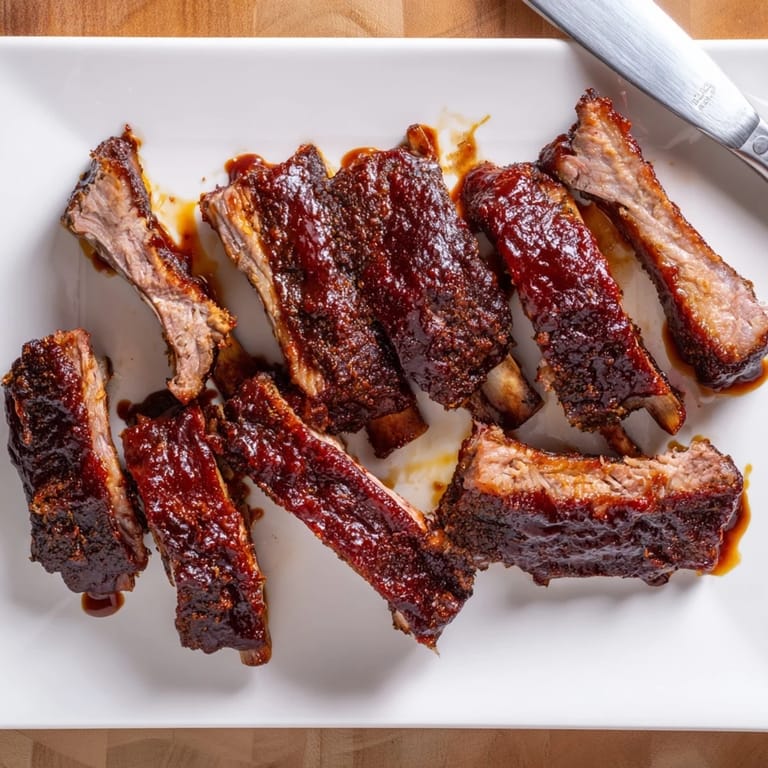
Save My brother-in-law showed up at our Fourth of July party with three racks of ribs he'd started at dawn, and I spent the entire afternoon watching people float toward the grill like magnets. There's something about slow-cooked ribs that makes conversation pause and plates empty faster than you expect. I've been tweaking his method ever since, and the real secret turned out to be that low-and-slow patience followed by a quick, high-heat finish that creates this incredible sticky glaze.
Last summer, I made these for a small dinner party and forgot to account for resting time, so we ended up eating standing up around the kitchen counter. Nobody cared. The ribs were so tender they were practically falling apart as I sliced them, and my friend Sarah asked for the recipe before she'd even finished her first serving. Sometimes the best meals happen when you abandon the formal dining plan anyway.
Ingredients
- 1.5–2 kg (3–4 lbs) pork or beef ribs: Choose meaty racks with good marbling, and ask your butcher to remove the thin membrane if you want to skip that fussy step
- 2 tbsp olive oil: This helps the dry rub cling to every surface and creates a better crust during the initial roast
- 2 tbsp brown sugar: The molasses content here helps with caramelization and balances the savory spices perfectly
- 1 tbsp smoked paprika: This single ingredient is what gives restaurant ribs that authentic smoky flavor without touching a smoker
- 1 tsp garlic powder and onion powder: Use fresh, high-quality spices since they're the backbone of your entire flavor profile
- 1 tsp ground black pepper and salt: Freshly ground black pepper makes a noticeable difference in the final depth of flavor
- ½ tsp cayenne pepper: Skip this if you're feeding spice-averse folks, but it adds just enough warmth to cut through the sweetness
- 1 cup barbecue sauce: Pick your favorite brand, but check the ingredient list for high-quality tomato paste and natural smoke flavor
- 2 tbsp honey: This helps the glaze achieve that restaurant-quality sticky finish and gloss
- 1 tbsp apple cider vinegar: The acidity cuts through the richness and balances the sweet elements beautifully
Tired of Takeout? 🥡
Get 10 meals you can make faster than delivery arrives. Seriously.
One email. No spam. Unsubscribe anytime.
Instructions
- Preheat your oven to 150°C (300°F):
- Line a large baking sheet with aluminum foil because this will save you from scrubbing baked-on sauce later
- Prep the ribs:
- Pull off that thin papery membrane from the bone side using a paper towel for grip, then pat the ribs completely dry
- Make the dry rub:
- Mix the brown sugar, smoked paprika, garlic powder, onion powder, black pepper, salt, and cayenne in a small bowl until well combined
- Season generously:
- Rub the olive oil all over the ribs, then press the spice mixture into every nook and cranny until they're evenly coated
- Start the slow cook:
- Place the ribs meat-side up on your prepared baking sheet and cover tightly with foil to trap all that moisture
- Low and slow:
- Bake for 2 to 2½ hours until the meat is fork-tender and starting to pull away from the bone ends
- Mix your glaze:
- Whisk together the barbecue sauce, honey, and apple cider vinegar in a bowl until smooth
- Crank up the heat:
- Remove the ribs from the oven and increase the temperature to 220°C (425°F) or fire up your grill to medium-high
- Glaze and finish:
- Brush the ribs generously with your sauce mixture, then return them to the oven uncovered for 10 to 15 minutes, basting once halfway through
- Rest and serve:
- Let the ribs rest for 5 minutes so the juices redistribute, then slice between the bones and pass extra sauce at the table
 Save
Save These ribs have become my go-to for bringing people together, whether it's a summer birthday or just a random Sunday when everyone happens to be free. There's something about food that takes hours to cook that makes people slow down and really enjoy the moment. Last time I made them, we ended up sitting outside way past dark, just talking while the grill cooled down.
The Secret to Restaurant-Quality Ribs
I discovered that most home cooks rush the low-and-slow phase, but that's where all the magic happens. The connective tissue needs time to break down completely, and you can't rush collagen conversion with higher temperatures. I used to try to speed things up at 375°F, but the meat always ended up tough. Now I embrace the waiting time and pour a glass of wine while the oven does the heavy lifting.
Making It Your Own
The dry rub is incredibly forgiving, so feel free to adjust based on what your family loves. I sometimes add a teaspoon of cumin for a slightly earthier note, or extra brown sugar if I know I'm serving people with a serious sweet tooth. The key is tasting your spice blend before it goes on the meat and adjusting until it makes you excited to eat it.
Serving Suggestions That Work
These ribs are rich and smoky, so they pair beautifully with something bright and acidic to cut through the fat. I love serving them with a crisp vinegar-based coleslaw or a simple green salad with tangy vinaigrette. Cornbread is another classic choice because it soaks up all those extra sauces and juices beautifully.
- Set out plenty of napkins because eating ribs properly is a hands-on affair
- Offer wet wipes at the table, and don't be afraid to get your fingers messy
- Consider serving extra sauce warmed in a small bowl for dipping
 Save
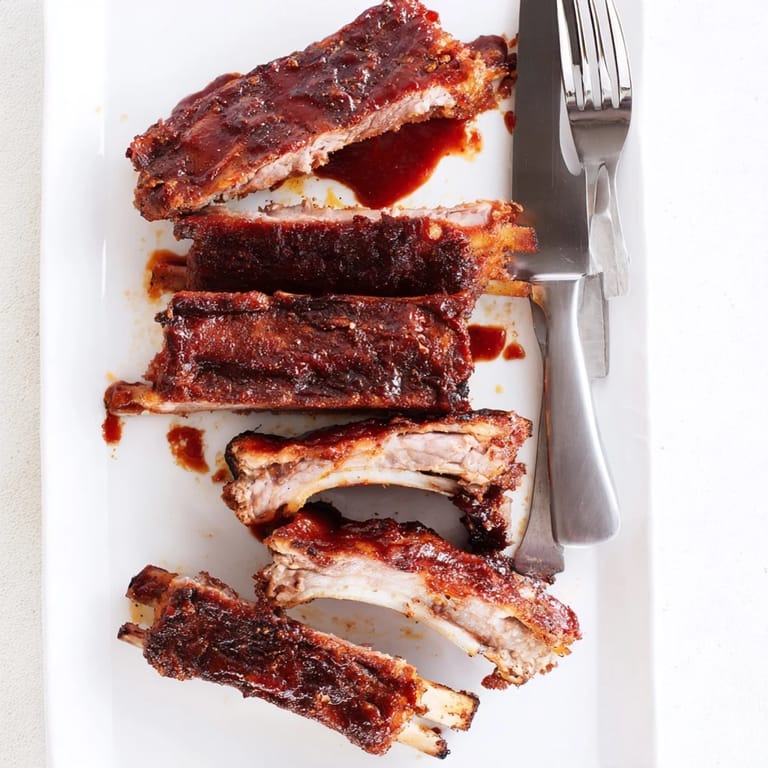
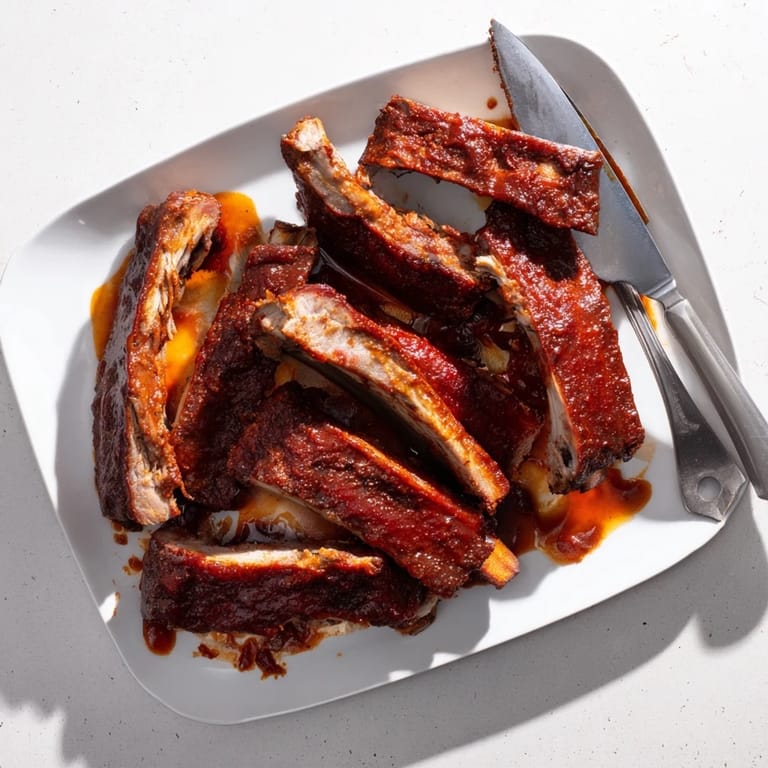
Save There's nothing quite like pulling a rack of ribs from the oven and seeing that perfect sticky glaze catching the light. Hope these become the centerpiece of your best gatherings too.
Recipe FAQs
- → How do you know when ribs are fully cooked?
Ribs are fully cooked when the meat pulls away from the bone ends and the internal temperature reaches 145°F. For fall-off-the-bone tenderness, the meat should easily separate from bones with gentle pressure.
- → Should you remove the membrane from ribs?
Yes, removing the thin silvery membrane from the back of ribs is recommended. It prevents seasonings from penetrating and creates a tough texture. Use a paper towel to grip and peel it off before seasoning.
- → Can you make these ribs ahead of time?
Absolutely. Cook the ribs completely, let them cool, and refrigerate for up to 3 days. Reheat covered in foil at 300°F for 20-30 minutes, then add fresh glaze and broil for 5 minutes to restore the sticky finish.
- → What's the difference between pork and beef ribs?
Pork ribs are typically more tender and cook faster, while beef ribs offer richer flavor and more meat. Pork baby back ribs are leaner, whereas beef short ribs have more marbling. Both work beautifully with this cooking method.
- → How can you make ribs spicier?
Increase the cayenne pepper in the dry rub or add hot sauce to the glaze mixture. Chipotle powder also adds heat along with extra smokiness. Adjust gradually to maintain balance with the sweetness.
- → What sides pair best with BBQ ribs?
Classic sides include creamy coleslaw, cornbread, baked beans, potato salad, or macaroni and cheese. Grilled corn, roasted vegetables, and pickles help cut through the richness and complement the smoky flavors.