 Save
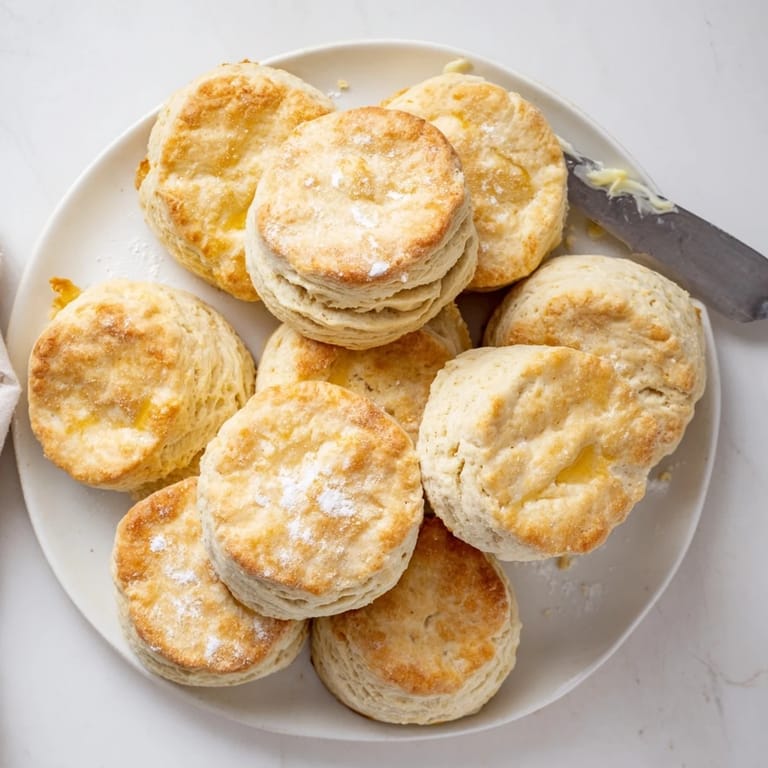
Save The smell of butter hitting hot flour takes me back to my grandmother's kitchen, where I learned that the secret to tall biscuits is confidence and cold hands. She never measured anything exactly, but she knew by touch when the dough was ready. Now I understand why those biscuits were legendary. It's not just about ingredients. It's about treating the dough gently.
I once made these for a Sunday brunch and watched my brother-in-law eat three straight from the oven, burning his fingers between each bite. That's when I knew this recipe was special. There's something magical about breaking open a freshly baked biscuit and watching steam escape from those tender layers.
Ingredients
- 2 cups all-purpose flour: Provides the structure for those tall, proud biscuits we're after
- 1 tablespoon baking powder: The primary leavening agent that gives biscuits their impressive rise
- ½ teaspoon baking soda: Works with the buttermilk's acidity for extra lift and browning
- 1 teaspoon fine sea salt: Enhances all the flavors and balances the sweetness
- 1 tablespoon granulated sugar: Just enough to help with browning and add subtle sweetness
- ½ cup unsalted butter, cold and cubed: Cold butter creates those coveted flaky pockets as it melts in the oven
- ¾ cup cold buttermilk: The acidity activates the baking soda and adds tenderness plus tang
Tired of Takeout? 🥡
Get 10 meals you can make faster than delivery arrives. Seriously.
One email. No spam. Unsubscribe anytime.
Instructions
- Preheat and prep your station:
- Heat your oven to 220°C (425°F) and line a baking sheet with parchment paper so you're ready to bake immediately
- Whisk the dry ingredients together:
- In a large bowl, combine the flour, baking powder, baking soda, salt, and sugar until everything is evenly distributed
- Cut in the cold butter:
- Add the cubed butter and work it quickly into the flour with a pastry cutter or your fingertips until you see coarse crumbs with some pea-sized butter pieces still visible
- Add the buttermilk:
- Make a well in the center, pour in the cold buttermilk, and gently fold with a fork just until the dough comes together
- Build the layers:
- Turn the dough onto a floured surface, pat into a rectangle, fold in half, and repeat this fold two more times for maximum flakiness
- Cut and arrange:
- Pat the dough to 2.5 cm (1 inch) thickness, cut straight down with a round cutter, and place biscuits close together on the baking sheet so they rise upward
- Bake to golden perfection:
- Brush tops with buttermilk and bake for 13 to 15 minutes until tall and deeply golden brown
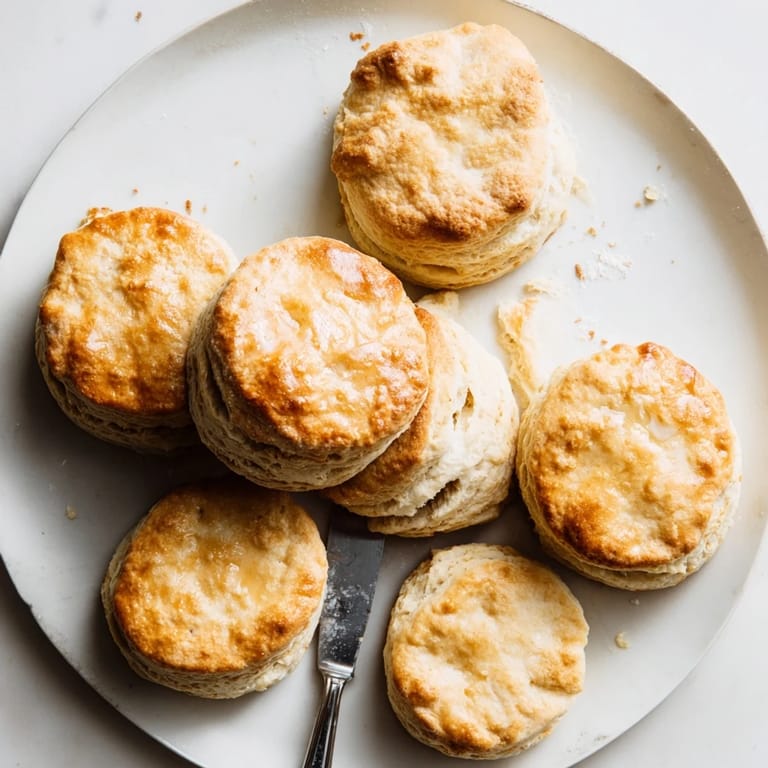 Save
Save These biscuits have become my go-to for housewarming gifts because they travel beautifully and make any kitchen feel like home. Something about homemade biscuits tells people they're welcome.
Make Them Your Own
Once you master the basic dough, try folding in sharp cheddar, chopped fresh herbs, or even cracked black pepper. The variations are endless and equally delicious.
Buttermilk Substitutions
No buttermilk in the fridge? No problem. Mix regular milk with a splash of lemon juice or vinegar, let it sit for five minutes, and it works perfectly in a pinch.
Serving Ideas
Split them warm and slather with salted butter and honey, or use them as the foundation for the best breakfast sandwich of your life.
- Freeze unbaked biscuits on a baking sheet, then transfer to a bag for fresh biscuits anytime
- Brush melted butter on hot biscuits for extra richness and a gorgeous shine
- Store baked biscuits in an airtight container and reheat briefly before serving
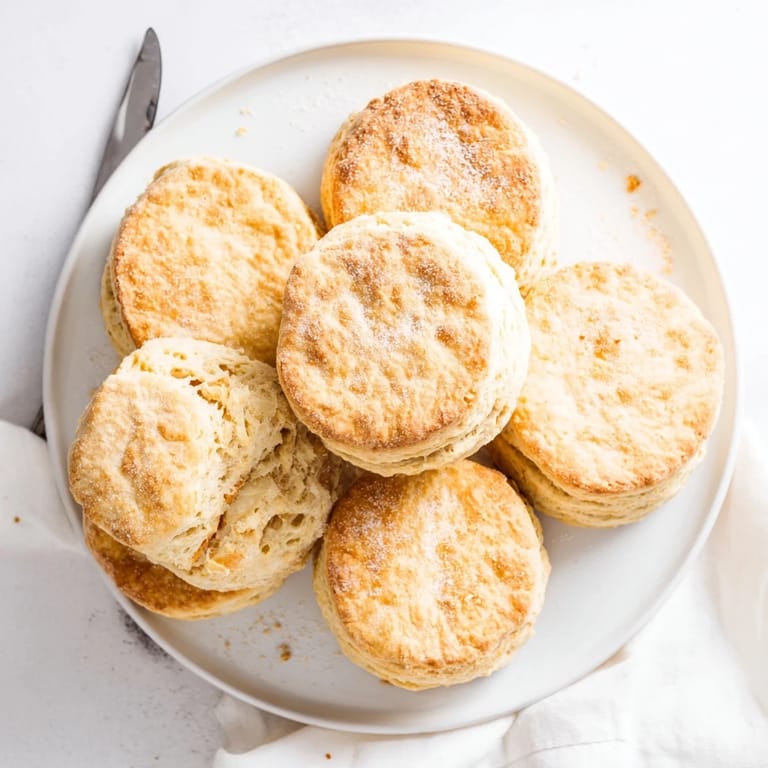 Save
Save There's nothing quite like pulling a tray of golden biscuits from the oven and watching everyone gather around, waiting for that first warm bite.
Recipe FAQs
- → Why must the butter and buttermilk be cold?
Cold butter creates small pockets of steam during baking, resulting in flaky layers. Warm butter melts into the flour before baking, preventing proper layer formation. Cold buttermilk keeps the butter from softening while mixing.
- → Can I substitute regular milk for buttermilk?
Yes. Combine ¾ cup milk with 2 teaspoons lemon juice or vinegar. Let it sit for 5 minutes until slightly thickened. This homemade version provides the necessary acidity to activate baking powder and soda.
- → Why should I avoid twisting the biscuit cutter?
Twisting seals the edges, preventing proper rising. Press straight down and lift up cleanly. Sealed edges create lopsided biscuits. Cutting cleanly allows the layers to expand upward for tall, even results.
- → How do I know when biscuits are done?
Biscuits are finished when tops are golden brown and tops feel firm when gently pressed. The bottoms should be lightly golden. They should sound hollow when tapped on the bottom. Internal temperature reaches about 200°F.
- → Why fold the dough multiple times?
Folding creates layers of butter and flour, similar to laminated dough. Each fold builds additional flaky strata without overworking the gluten. Three folds produce optimal tenderness and height.
- → Can I freeze the dough or baked biscuits?
Freeze unbaked cut biscuits on a parchment-lined sheet until firm, then transfer to a bag. Bake from frozen, adding 2-3 minutes. Baked biscuits freeze well for up to 3 months and reheat beautifully in a 350°F oven.