 Save
Save My sister called in a panic the afternoon of her garden party, convinced she'd never pull off anything elegant enough for her guests. I suggested mini pavlovas, and what started as her skepticism became pure joy when she tasted that first crisp-then-creamy bite topped with strawberries. Now whenever spring rolls around, she texts me asking for the recipe again, even though she's made it a dozen times. There's something almost magical about how a few egg whites transform into something so impossibly delicate and impressive.
I'll never forget watching my neighbor's face when she bit into one at a potluck, her eyes going wide like she'd discovered something forbidden. She swore I must have bought them from a bakery until I admitted the whole thing took me less than two hours of actual work. That's when pavlovas became my secret weapon for looking like I spent way more time in the kitchen than I actually did.
Ingredients
- Egg whites (4 large, room temperature): Room temperature is non-negotiable here—cold eggs won't whip up properly no matter how long you beat them, and you need them to reach those stiff, glossy peaks that catch the light.
- Superfine sugar (1 cup): Regular sugar works but dissolves slower, which means you'll be beating longer and risk overworking the meringue.
- Cornstarch (1 teaspoon): This tiny amount is the secret that keeps the outside crisp while the inside stays slightly chewy and tender.
- White vinegar (1 teaspoon): It stabilizes the meringue and helps it hold its shape during that long, gentle bake.
- Vanilla extract (1 teaspoon for meringue, 1 teaspoon for cream): Use real vanilla if you can—it adds a subtle warmth that makes people wonder what your secret ingredient is.
- Heavy whipping cream (1 cup, cold): Cold cream whips faster and holds its shape longer, so chill it if your kitchen runs warm.
- Powdered sugar (2 tablespoons): It dissolves instantly into cream unlike granulated sugar, giving you smooth, silky whipped cream on the first try.
- Fresh strawberries (1½ cups, hulled and sliced): Peak season berries taste infinitely better, but frozen-then-thawed strawberries work when you're in a pinch.
- Granulated sugar and lemon juice for berries: The lemon brightens the strawberry flavor while the sugar draws out their natural juices, creating a light syrup.
Tired of Takeout? 🥡
Get 10 meals you can make faster than delivery arrives. Seriously.
One email. No spam. Unsubscribe anytime.
Instructions
- Prepare your workspace:
- Set your oven to 250°F and line a baking sheet with parchment paper. Make absolutely sure your mixing bowl and beaters are completely dry and grease-free—even a tiny smudge of yolk or oil will sabotage everything.
- Whip the egg whites:
- Beat the room-temperature eggs on medium speed until you see soft, billowing peaks forming. This takes about 3 to 4 minutes and sounds like a gentle wind rushing through the mixer.
- Add sugar gradually:
- Sprinkle in the superfine sugar one tablespoon at a time, beating continuously, until the mixture transforms into thick, glossy peaks that hold their shape. This is where the magic happens and why patience matters—rushing it produces a grainy, sad meringue.
- Fold in the secret ingredients:
- Gently fold the cornstarch, vinegar, and vanilla into the meringue using a spatula with slow, careful strokes. You want to keep as much air in there as possible, so fold from the bottom up and turn the bowl slightly with each motion.
- Shape the nests:
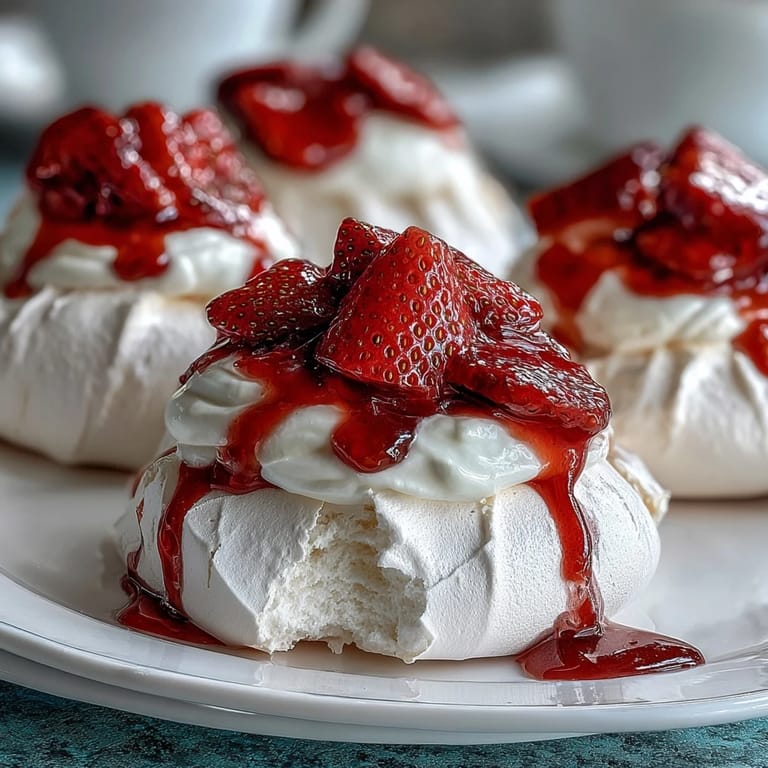
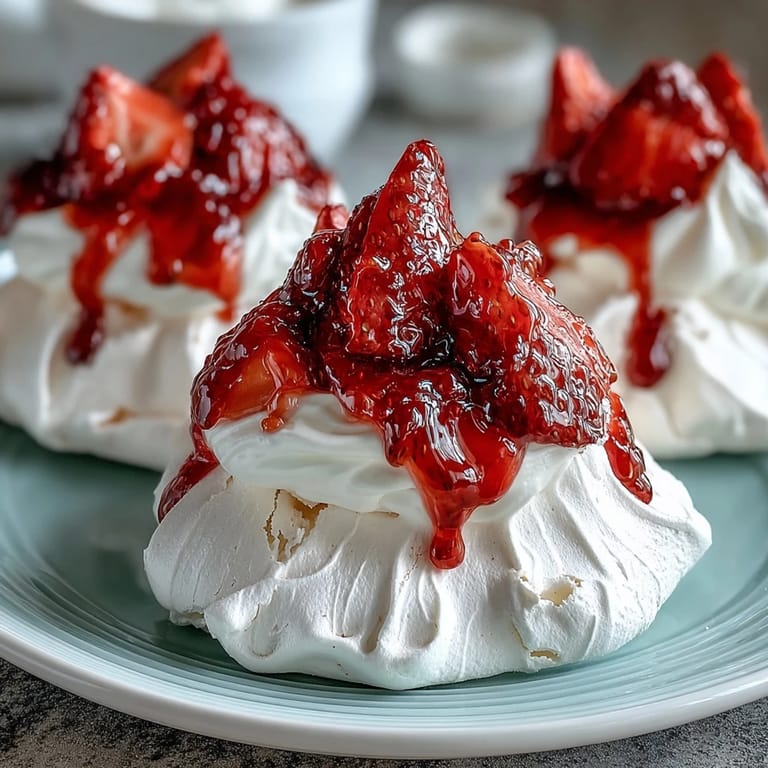
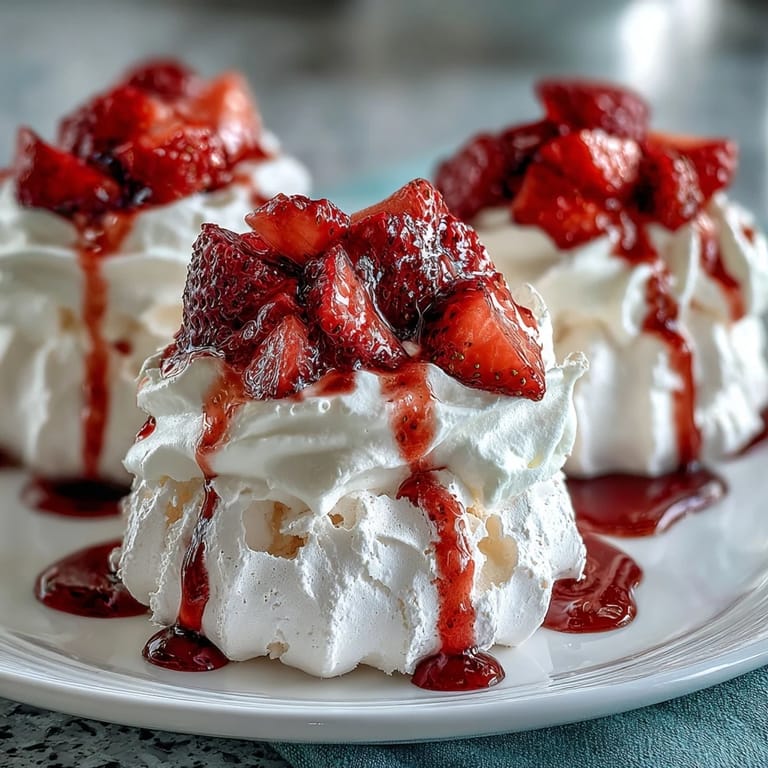
- Spoon or pipe the meringue into 6 small mounds on the parchment, then use the back of a spoon to create a little nest-like indentation in the center of each one. They'll bake into crispy shells with just enough texture to cradle the cream and berries.
- Bake low and slow:
- Slide them into that cool oven for a full hour, then turn the heat off and crack the oven door open slightly. Let them cool inside for at least 30 minutes so they dry out without cracking.
- Macerate the strawberries:
- While the meringues cool, toss your sliced strawberries with a tablespoon of granulated sugar and the lemon juice. Let them sit for about 15 minutes so they release their juices into a light, sweet syrup.
- Whip the cream:
- Pour cold heavy cream into a clean bowl, add the powdered sugar and vanilla, and beat until soft peaks form. Don't overbeat or you'll end up with butter, which honestly isn't the worst mistake but definitely not what we're going for here.
- Assemble just before serving:
- Place each cooled meringue on a serving plate, spoon a generous dollop of whipped cream into the center, and top with the macerated strawberries and a bit of their syrup. Serve immediately so the meringue stays crisp.
 Save
Save There's a moment when you pull those meringues out of the oven and they're still warm and fragile in your hands, and you realize you've created something entirely edible that feels like it shouldn't be. That's when pavlovas stopped being just dessert for me and became proof that good things happen when you slow down and trust the oven.
The Art of Perfect Meringue
The cornstarch and vinegar combination might seem oddly specific, but together they're like an insurance policy for your meringue. The cornstarch absorbs moisture and helps maintain that signature crisp-outside-chewy-inside texture, while the vinegar strengthens the protein structure so everything holds together during that long bake. I used to skip both ingredients thinking they were unnecessary, then my pavlovas would weep and crumble, and I'd be standing in the kitchen wondering what went wrong. Now I never question them.
Why Timing Matters
The two-hour total time including cooling might seem long, but most of it is hands-off oven time where you can do literally anything else. The actual active work—beating eggs and whipping cream—takes maybe 15 minutes total, which means you can prep everything before guests arrive and have a show-stopping dessert ready to plate in moments. This is exactly why pavlovas became my favorite last-minute impressive dessert.
Variations and Storage
These meringue shells are incredibly versatile once you master the basic technique, so feel free to play around with different berry combinations or even switch to stone fruits when they're in season. The beauty of preparing them a day ahead means you can make them whenever the mood strikes and assemble them fresh whenever you need something beautiful on the table. Just store the cooled, completely dry meringues in an airtight container with parchment between layers so they don't stick together.
- Try passion fruit pulp drizzled over the top for a tropical twist, or a berry coulis if you want something with more acidity.
- Mint leaves tucked into the whipped cream add freshness and make them look even more elegant.
- You can make these meringues in any size you want—larger ones for a showstopping centerpiece, or tiny ones for delicate bites at a party.
 Save
Save These little pavlovas have become my quiet proof that elegance doesn't require complicated techniques or hard-to-find ingredients. Serve them and watch people's faces light up as they discover how delicate and creamy and perfect they are.
Recipe FAQs
- → How do I achieve crisp pavlova shells?
Whip the egg whites to stiff peaks and bake them slowly at a low temperature to dry them out without browning.
- → Can I substitute strawberries with other fruits?
Yes, fresh berries or a mixed selection can be used to top the pavlovas while maintaining bright flavors.
- → What helps the meringue nests keep their shape during baking?
Adding cornstarch and vinegar stabilizes the egg whites, preventing collapse and giving a crisp texture.
- → How can I store mini pavlovas before serving?
Store baked meringue nests in an airtight container at room temperature and assemble with cream and fruit just before serving.
- → What type of cream works best for topping?
Heavy whipping cream whipped to soft peaks with powdered sugar and vanilla provides a light, fluffy topping.