 Save
Save My neighbor Claude handed me a flounder fillet one afternoon with a knowing smile, saying his fishmonger had just gotten them in that morning. I'd never cooked flounder before, but he mentioned his grandmother's French technique—something about butter and lemon that seemed impossibly simple. That night, watching the delicate fish turn golden in the pan while the kitchen filled with that nutty, caramelized aroma, I understood why this dish has stayed elegant and unfussy for generations.
I made this for my partner on a quiet Thursday when we both needed comfort food that didn't feel heavy. We sat at the table with steamed green beans on the side, and halfway through, they looked up and said, "This tastes like a restaurant." That small moment made me realize how empowering it is to create something this good at home, without pretension or complicated technique.
Ingredients
- 4 flounder fillets (about 150 g each), skin removed: Flounder's delicate, mild flavor is the whole point here—ask your fishmonger for the thinnest fillets they have, as they cook faster and stay tender.
- 1/2 teaspoon kosher salt and 1/4 teaspoon freshly ground black pepper: Season generously before dredging; the flour will mute the seasoning slightly, so don't hold back.
- 1/2 cup all-purpose flour: Keep this on a shallow plate for easy dredging, and shake off every bit of excess—too much flour makes the crust heavy instead of delicate.
- 3 tablespoons unsalted butter, divided, and 2 tablespoons olive oil: The combination of both fats prevents the butter from burning while keeping the crust crisp and golden.
- 4 tablespoons unsalted butter: Use quality butter here since it's the star of the sauce; you'll taste every bit of it as it browns and turns nutty.
- Juice of 1 lemon (about 2 tablespoons) and 2 tablespoons chopped flat-leaf parsley: Lemon brightens everything and the parsley adds a fresh flourish that makes the dish look intentional.
- Lemon wedges, for serving: Let guests adjust the acidity to their taste—some people love extra brightness.
Tired of Takeout? 🥡
Get 10 meals you can make faster than delivery arrives. Seriously.
One email. No spam. Unsubscribe anytime.
Instructions
- Pat and season your fillets:
- Use paper towels to gently dry each fillet thoroughly—moisture is the enemy of a golden crust. Season both sides evenly with salt and pepper.
- Dredge lightly and shake off excess:
- Place flour on a shallow plate and coat each fillet quickly, then hold it over the plate and shake gently so only a whisper-thin layer remains. Too much flour muddles the delicate flavor.
- Heat your cooking fat:
- In a large nonstick skillet, combine butter and olive oil over medium-high heat. Wait until the butter foams and smells slightly sweet—this is your signal the pan is ready.
- Cook the fish with patience:
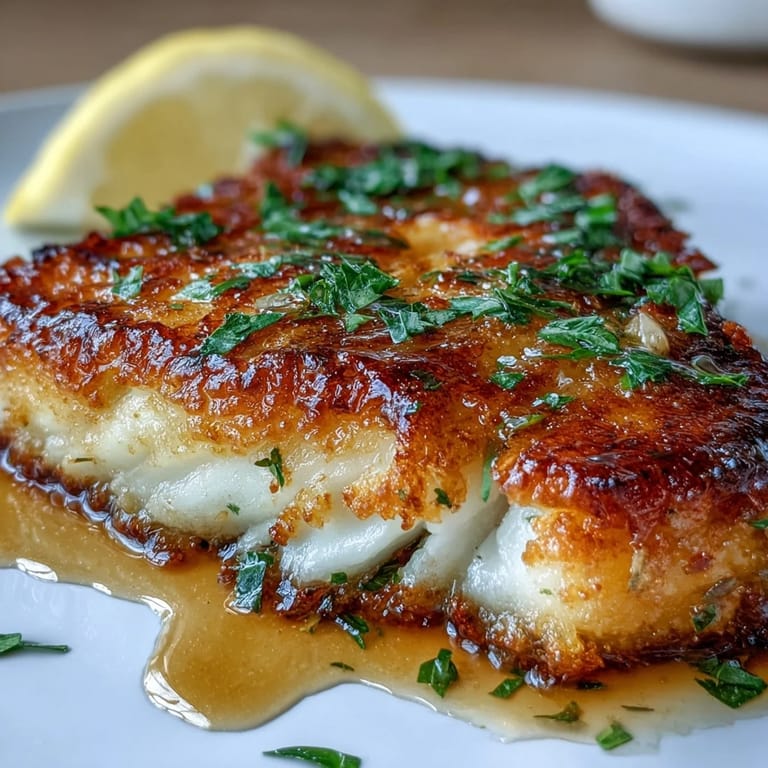
- Add fillets in a single layer (work in batches if needed) and listen for that gentle sizzle. Cook 2–3 minutes per side until the crust turns golden and the flesh just flakes when you peek at the thickest part—don't overcook or it'll taste dry.
- Create the browned butter sauce:
- Wipe the skillet clean and add the 4 tablespoons of butter over medium heat. Watch closely as it melts and turns from pale to golden to deep amber, about 2–3 minutes—you want it fragrant and nutty, never dark or burnt.
- Finish with brightness:
- Remove the pan from heat immediately and stir in lemon juice and parsley. The sauce will hiss and bubble slightly—that's perfect.
- Plate and serve without delay:
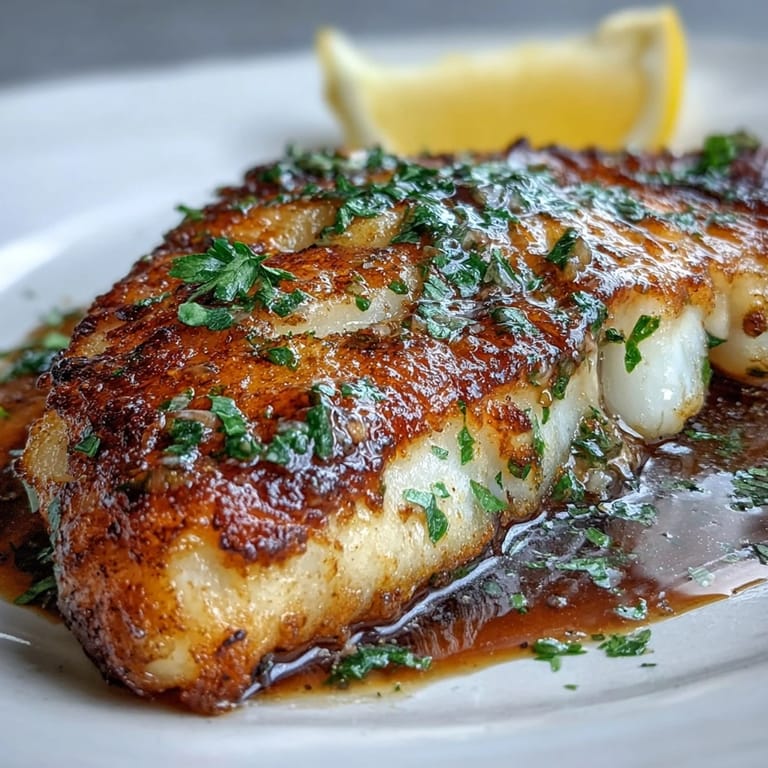
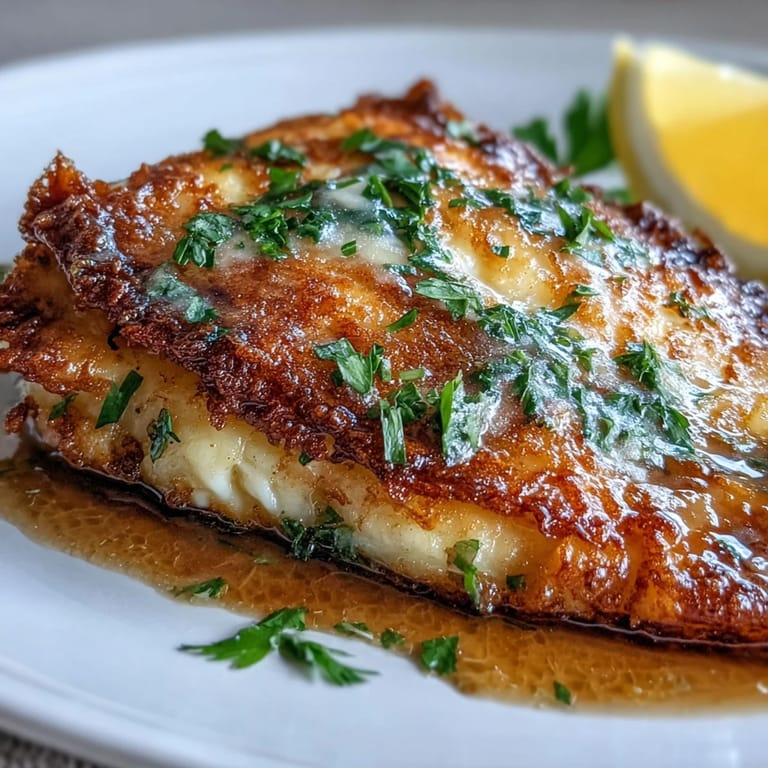
- Transfer fish to warm plates and spoon the browned butter sauce over top, then serve with lemon wedges nearby.
 Save
Save There was an evening when my sister came home exhausted from a long shift and I had this on the table 20 minutes later. She teared up a little, not because it was fancy, but because it tasted like someone had taken time to care. That's when I realized this dish isn't really about technique—it's about showing up for people with something thoughtful and delicious.
Why This Dish Works
The beauty of Flounder Meunière lives in restraint. Each element—the delicate fish, the golden crust, the browned butter—has its moment without overwhelming the others. French cooking often teaches us that simplicity requires precision, and this dish proves that lesson perfectly. When you stop trying to improve something that's already complete, you understand why this recipe has survived centuries of cooking trends.
Choosing Your Fish
Flounder is ideal because its mild, slightly sweet flavor accepts the browned butter without protest, but sole, tilapia, or even thin-cut cod work beautifully here too. The key is using something delicate and thin enough to cook through in just minutes. I've found that asking your fishmonger what came in fresh that morning often yields better results than insisting on a specific type. They'll know what's best, and they'll usually recommend the absolute peak of what they have.
Making It Your Own
Once you master the basic technique, small variations open up naturally. A splash of white wine in the butter before it browns adds richness and complexity. Some people add a whisper of garlic or capers to the sauce, and neither choice would be wrong—just make sure any additions don't overshadow the fish itself. The parsley can be swapped for tarragon or chives if you want to shift the mood slightly.
- Fresh herbs like tarragon or dill can replace parsley if you want a different aromatic direction.
- A splash of white wine added to the butter as it browns creates a silkier, more restaurant-style sauce.
- Serve alongside steamed green beans or crispy roasted potatoes to make the plate feel complete and intentional.
 Save
Save This is the kind of meal that reminds us why we cook—not for complexity, but for the quiet joy of making something delicious for ourselves or someone we care about. Once you've made it once, you'll reach for it again and again.
Recipe FAQs
- → What type of fish works best for meunière?
Flounder is traditional, but Dover sole, tilapia, or any mild white fish fillets work beautifully. Look for thin, delicate fillets that cook quickly and evenly.
- → Can I make this dish gluten-free?
Absolutely. Substitute the all-purpose flour with rice flour or a gluten-free flour blend. The technique remains exactly the same, and you'll still achieve that lovely golden crust.
- → How do I know when the butter is properly browned?
Watch for the butter to turn golden-amber and release a nutty aroma. This typically takes 2-3 minutes over medium heat. Don't let it go too dark or it will taste bitter.
- → What sides pair well with flounder meunière?
Steamed green beans, roasted potatoes, or simple rice let the fish shine. A crisp green salad with vinaigrette also complements the rich butter sauce beautifully.
- → Can I prepare components in advance?
You can season and dredge the fillets up to an hour ahead, keeping them refrigerated. However, the browned butter sauce is best made right before serving—it only takes a few minutes.