 Save
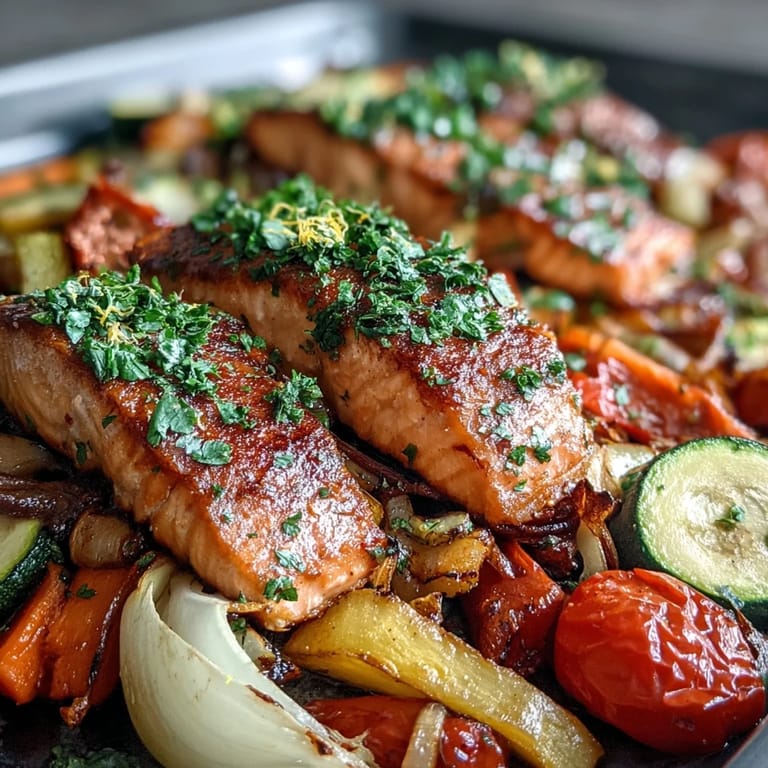
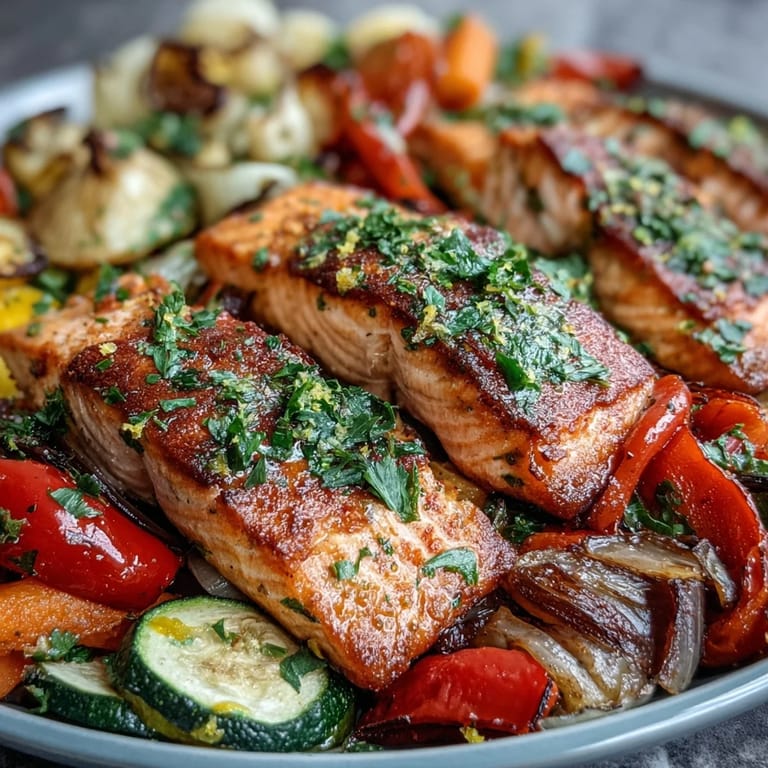
Save There's something quietly satisfying about opening the oven to find salmon blushed pink and vegetables glistening with caramelized edges, all on one pan. I discovered this bowl on a Tuesday night when I was tired of complicated cooking but didn't want to sacrifice flavor or nutrition. The magic happens in that final stretch when everything roasts together, the salmon's delicate richness mingling with the sweetness of caramelized onions and peppers. It became my go-to when I needed dinner that felt intentional without demanding much from me.
I made this for my sister on a night when she'd had a rough week at work, and watching her face light up when she bit into a piece of perfectly flaked salmon alongside a charred tomato told me everything. She asked for the recipe immediately, which never happens with my cooking. Since then, it's become our shorthand for "let's eat something that feels like self-care but doesn't require hours in the kitchen."
Ingredients
- Salmon fillets (4 fillets, 5–6 oz each): Patting them dry before oil makes all the difference for getting that gentle sear, and don't skip the lemon zest—it brightens everything without making it taste fishy.
- Olive oil (3 tablespoons total): Use good oil here since it's one of the few ingredients doing the heavy lifting flavor-wise.
- Red onion (1 medium, cut into wedges): The wedges hold together beautifully when roasted and turn almost sweet as they caramelize.
- Carrots (2 medium, sliced into ½-inch rounds): The thickness matters—thin slices dry out, thick ones don't cook through evenly.
- Bell peppers (1 red and 1 yellow, sliced): Mix your colors for visual appeal and because different peppers have subtle flavor variations that layer nicely.
- Zucchini (1 small, sliced into ½-inch half-moons): Don't use a huge zucchini or it'll have watery seeds that make everything soggy.
- Cherry tomatoes (1 cup, halved): These burst slightly during roasting and create little pockets of concentrated flavor throughout the pan.
- Italian herbs (1 teaspoon dried): A single teaspoon goes further than you'd think when everything roasts together.
- Fresh parsley (2 tablespoons, chopped): Add this only at the very end so it stays bright and doesn't turn dark and bitter.
- Lemon wedges: Guests always appreciate the option to squeeze fresh juice over their own plate.
Tired of Takeout? 🥡
Get 10 meals you can make faster than delivery arrives. Seriously.
One email. No spam. Unsubscribe anytime.
Instructions
- Preheat and line:
- Set your oven to 425°F and line a large sheet pan with parchment paper or foil. This matters because it prevents sticking and makes cleanup actually pleasant.
- Toss your vegetables:
- In a large bowl, combine the onion, carrots, bell peppers, zucchini, and cherry tomatoes with 2 tablespoons olive oil, dried Italian herbs, salt, and pepper. Spread them in a single layer on the sheet pan, making sure they're not crowded—overcrowding makes them steam instead of caramelize.
- Get a head start on the vegetables:
- Roast for 10 minutes alone. This gives them a chance to start softening and browning before the salmon joins them.
- Prepare your salmon:
- Pat the fillets completely dry with paper towels, then brush lightly with 1 tablespoon olive oil. Sprinkle with lemon zest, salt, and pepper on both sides, letting your hands feel the texture change as the seasonings stick to the moisture.
- Nestle salmon among the vegetables:
- Roast everything together:
- Return the pan to the oven for 12–15 minutes until the salmon flakes easily with a fork and vegetables have charred edges. You'll know it's done when the kitchen smells almost impossibly good and the salmon's opacity has crept about three-quarters of the way through the fillet.
- Finish and serve:
- Remove from the oven, scatter fresh parsley across the whole pan, and bring it straight to the table with lemon wedges on the side. Let people squeeze their own—it's more fun that way.
 Save
Save There was a night when I made this for a friend who was trying to eat more fish but thought she didn't like salmon, convinced it would be too "fishy" or heavy. Watching her ask for thirds and then request the recipe felt like witnessing a small conversion. Sometimes the best meals are the ones that change someone's mind.
The Beauty of Sheet Pan Cooking
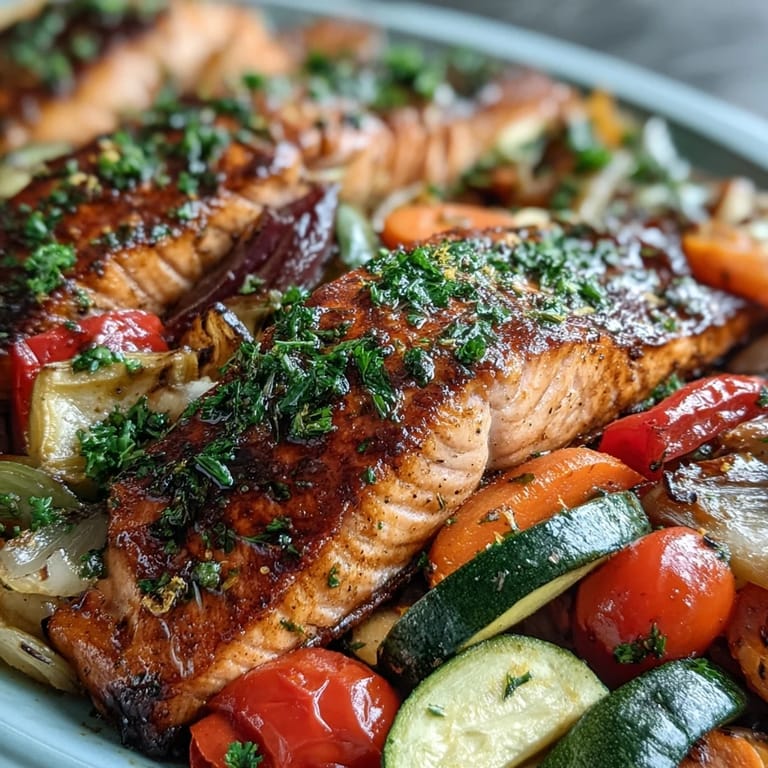
I've learned that sheet pan cooking isn't lazy cooking—it's smart cooking. Everything in this bowl benefits from direct, dry heat in a way that steaming or boiling simply can't replicate. The vegetables develop real caramelization, which means actual flavor development, not just softening. The salmon's exterior firms up gently while the center stays tender. It's the opposite of a compromise meal; it's a focused one.
Seasonal Swaps That Actually Work
I've tried this recipe with completely different vegetables depending on what's in season or what I'm craving. In summer, asparagus and snap peas roast beautifully alongside the salmon. In fall, I've swapped in chunks of sweet potato and Brussels sprouts. In spring, fresh broccoli florets work wonderfully. The formula stays the same—toss in oil and herbs, roast the vegetables first, add the salmon—but the personality of the dish changes completely with the seasons.
Making It Your Own
This recipe thrives on small customizations that make it feel like yours rather than something you're copying. Some nights I add a sprinkle of feta cheese right before serving for a briny counterpoint. Other times I'll drizzle the finished bowl with a small amount of balsamic vinegar for deeper complexity. Once I even added a light dusting of Parmesan that I don't recommend, but you should definitely try things and discover what speaks to your palate. The core of the recipe is solid enough to handle your experiments.
- Squeeze fresh lemon juice directly over individual plates instead of just offering wedges—the brightness hits differently.
- If you're adding cheese or glazes, wait until the last possible moment so nothing steams or becomes greasy.
- Leftovers taste completely different cold the next day and make a surprisingly good lunch bowl.
 Save
Save This bowl has become my answer to the question I ask myself most nights: what can I make that feels nourishing without feeling like work? It's the kind of meal that doesn't apologize for being simple.
Recipe FAQs
- → Can I use frozen salmon fillets?
Yes, frozen salmon works well. Thaw completely in the refrigerator overnight before cooking, then pat dry thoroughly before seasoning to ensure proper roasting.
- → What vegetables work best for this bowl?
Root vegetables like carrots and onions, along with peppers, zucchini, and cherry tomatoes roast beautifully. You can also substitute asparagus, broccoli, sweet potatoes, or Brussels sprouts based on season.
- → How do I know when the salmon is done?
The salmon is finished when it flakes easily with a fork and reaches an internal temperature of 145°F. The flesh should appear opaque throughout and offer slight resistance when pressed.
- → Can I meal prep this dish?
Absolutely. Portion into airtight containers and refrigerate for up to 4 days. Reheat gently at 350°F for 10-15 minutes, or enjoy cold over greens for a quick lunch.
- → What sides pair well with this bowl?
The dish is complete as-is, but you can serve over quinoa or brown rice for extra carbohydrates. A light white wine like Sauvignon Blanc complements the flavors nicely.