 Save
Save My kitchen filled with the smell of cumin and smoked paprika on a random Tuesday evening when I needed something that would actually stick to my ribs. There's something about a chili bowl that just works—no fuss, no complicated techniques, just honest ingredients simmering together while you go about your day. That first spoonful over warm rice taught me that the best comfort food doesn't need to be complicated. I've made this so many times now that I could probably do it half-asleep, but I never rush it because the magic happens when you let those spices bloom and the beans soften into the sauce.
I served this to my neighbor Mike who had just moved in, and he stood in my kitchen eating straight from the pot while it was still warm, asking what was in it before I'd even ladled his first bowl. That moment felt like more than just sharing food—it was the beginning of actual friendship, the kind that starts over something simple and honest.
Ingredients
- Olive oil: Two tablespoons is your starting point, and it's worth using decent oil because it carries those spice flavors through everything else.
- Onion: Dice it medium and let it soften completely in the oil—this is where your base flavor comes from, so don't skip this step.
- Garlic: Mince it fine and add it right after the onion softens so it doesn't burn; burnt garlic tastes bitter and ruins the whole pot.
- Bell peppers: One red and one green gives you sweetness and brightness, and dicing them the same size as your onion means they cook at the same rate.
- Ground beef: A pound of quality meat makes a difference, but honestly turkey or a plant-based alternative works just as well if that's what you're doing.
- Tomato paste: This stuff is concentrated umami, and cooking it in the pot for a minute deepens the entire flavor profile.
- Diced tomatoes: Canned is perfect here—no need for fresh—and the liquid they come in is part of your sauce.
- Kidney beans and black beans: Drain and rinse them so you're not adding extra sodium and starch to the pot.
- Corn kernels: Fresh, frozen, or canned all work, and the sweetness balances the spice beautifully.
- Chili powder: This is the backbone of your flavor, so taste as you go and adjust to your preference.
- Ground cumin: A teaspoon brings warmth and earthiness; smell it before you add it and you'll understand why it matters.
- Smoked paprika: This is where the depth comes from, the ingredient that makes people ask what you're hiding in here.
- Dried oregano: Half a teaspoon is enough to add herbs without overpowering, especially with everything else going on.
- Salt and pepper: Start conservative and taste at the end; you can always add more but you can't take it back.
- Cayenne pepper: Optional, but just a quarter teaspoon gives you a slow burn rather than a shock of heat.
- Beef or vegetable broth: This liquid keeps everything moving and deepens the sauce as it simmers.
- Cooked rice or grains: Your vehicle for the chili, and whichever you choose, cook it separately so you control the texture.
Tired of Takeout? 🥡
Get 10 meals you can make faster than delivery arrives. Seriously.
One email. No spam. Unsubscribe anytime.
Instructions
- Get your base building:
- Heat olive oil in a large pot over medium heat and add your diced onion, stirring occasionally until it becomes soft and translucent, about two to three minutes. You'll know it's ready when the raw bite is gone and your kitchen smells like something is actually happening.
- Add aromatics and color:
- Toss in your minced garlic and diced bell peppers, stirring everything together and cooking for another three to four minutes until the peppers start to soften. The garlic will perfume everything, so breathe it in because this is when you know you're on the right track.
- Brown your protein:
- Add the ground beef or your alternative protein, breaking it up with a wooden spoon as it cooks, until it's fully browned and no pink remains, about five to seven minutes. The meat releases fat and color into the pot, building a flavorful foundation for everything that follows.
- Deepen with tomato paste:
- Stir in your tomato paste and cook it in the pot for exactly one minute, letting it caramelize slightly and concentrate its umami. This single minute of cooking transforms it from sharp to rich.
- Add beans, tomatoes, and spices:
- Pour in your diced tomatoes, drained kidney beans, drained black beans, corn kernels, and every spice on your counter—chili powder, cumin, smoked paprika, oregano, salt, pepper, and cayenne if you're using it. Mix everything together thoroughly so the spices distribute evenly and coat every ingredient.
- Simmer until it all comes together:
- Pour in your broth, bring everything to a gentle simmer over medium-high heat, then lower the heat and cover the pot. Let it cook for twenty-five to thirty minutes, stirring occasionally, until the beans are tender and the flavors have married into something greater than their individual parts.
- Time your grains right:
- About fifteen minutes before your chili finishes, start cooking your rice or grains according to package directions so they're hot and ready when you need them. Timing is everything here—nobody wants cold rice under hot chili.
- Build your bowls:
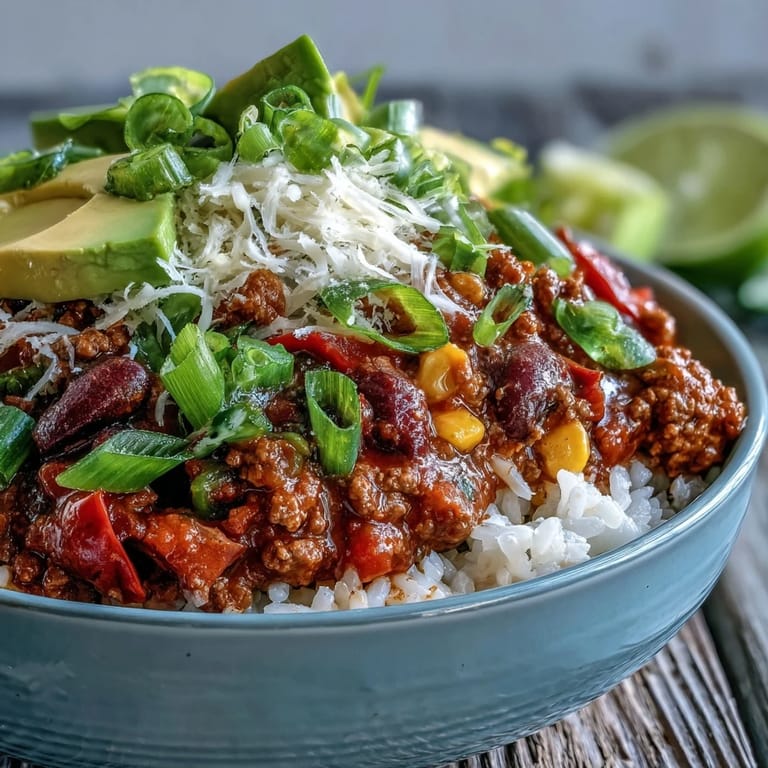
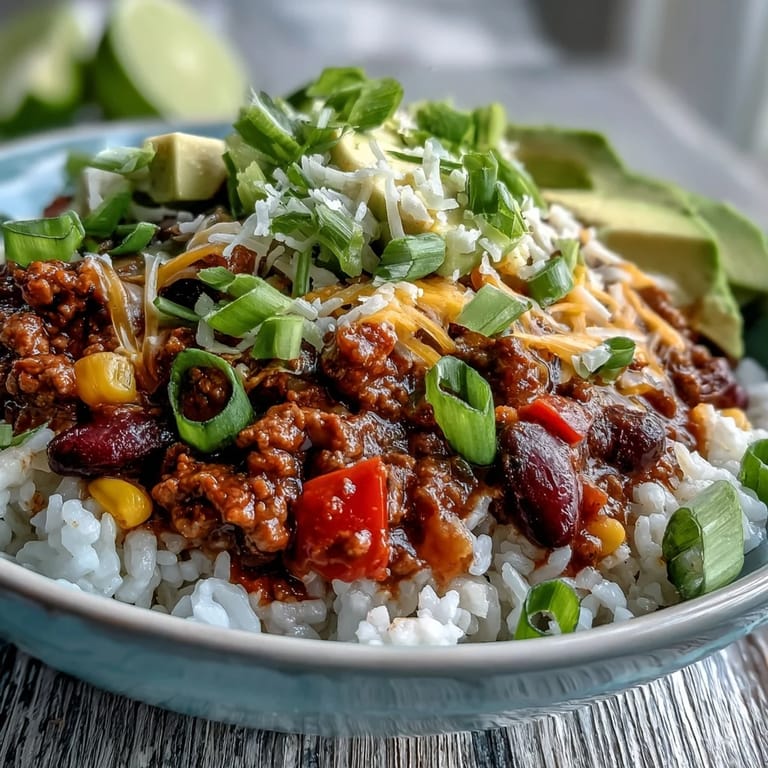
- Spoon a generous amount of cooked rice or grains into each bowl, then ladle the chili over the top, letting the sauce soak in slightly. Top with whatever sounds good—cheese, sour cream, green onions, cilantro, avocado, jalapeño slices, lime wedges—and let people add their own personality to their bowl.
 Save
Save I learned that comfort food is its own language when my daughter came home from a rough day at school and ate three bowls of this without saying much of anything, and then asked if I'd make it again tomorrow. Some meals are just there to hold you through the hard moments, and this one does that job better than anything I know.
Why This Works as a Weeknight Dinner
The beauty of this chili is that it doesn't demand your full attention or fancy knife skills; you chop a few vegetables, brown some meat, and then you can basically walk away while it simmers. Most of the cooking time is just the pot doing its thing, which means you can make salad, fold laundry, or simply sit down for a moment without feeling guilty about it.
Making It Your Own
Every kitchen has different tastes and different restrictions, so this recipe is genuinely designed to bend without breaking. If your house doesn't do dairy, skip the cheese and sour cream and add an extra dollop of avocado; if you're vegetarian, swap in lentils or a plant-based ground meat and use vegetable broth; if someone in your family hates cilantro, use green onions instead or just skip the fresh herbs altogether.
Spice Level and Heat Management
The cayenne pepper is optional, which tells you something important—this chili is meant to comfort, not challenge your mouth. Start with no cayenne at all, taste it when it's done simmering, and then decide if you want to add heat; you can always stir in a pinch more, but you can't undo too much. Serving the chili in bowls where people control their own toppings also means someone can add jalapeños or hot sauce to their individual bowl while someone else keeps theirs mild.
- Taste constantly as you build the flavors; what's good at thirty minutes might need adjustment at fifty-five.
- Keep lime wedges on the table because a squeeze of brightness at the very end wakes up every other flavor you've built.
- Leftover chili works in tacos, on nachos, or loaded onto hot dogs, so don't panic if you make too much.
 Save
Save This chili has fed my family through football seasons and snow days, and it's taught me that the best recipes are the ones you return to without thinking. Make it once, then make it again your own way, and before you know it, someone will ask if you can make your special chili bowl for their birthday dinner.
Recipe FAQs
- → Can I make this vegetarian?
Absolutely. Substitute plant-based ground meat or add an extra can of beans for protein. The broth can be vegetable-based instead of beef for a fully vegetarian version.
- → How long does this keep in the refrigerator?
The chili base stores well for 4-5 days in an airtight container. The flavors often deepen and improve after a day or two. Reheat gently on the stovetet, adding a splash of broth if needed.
- → Can I freeze this chili?
Yes, freeze the cooled chili in freezer-safe containers for up to 3 months. Thaw overnight in the refrigerator and reheat on the stovetop. Prepare fresh rice or grains when serving.
- → What other grains work well?
Brown rice, quinoa, farro, bulgur, and barley all complement the hearty chili. Choose based on preference or what you have available. Each adds unique texture and nutritional benefits.
- → How can I adjust the spice level?
Start with less chili powder and cayenne, then taste and adjust. Remove seeds from jalapeños for milder heat. Conversely, add more cayenne or serve with hot sauce for those who enjoy extra spice.
- → What other toppings work well?
Beyond the classic options, try crushed tortilla chips for crunch, pickled red onions for tang, or a dollop of guacamole. Sliced radishes, cotija cheese, or a squeeze of fresh lime juice also add brightness.