 Save
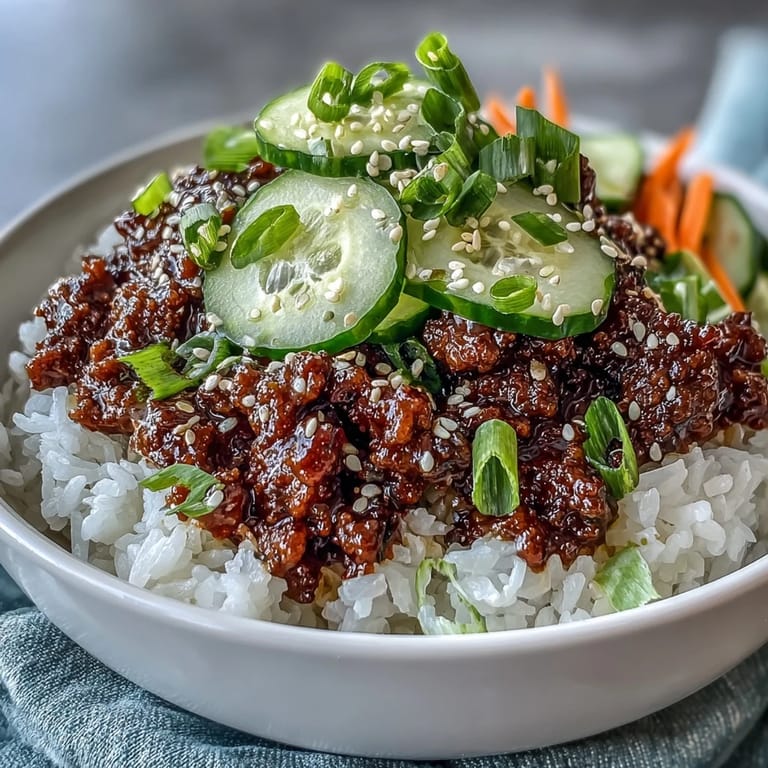
Save My kitchen smelled like toasted sesame oil the afternoon I first made this Korean ground beef bowl, and honestly, it was pure accident. I'd picked up gochujang on a whim at the Korean market, not entirely sure what to do with it, and decided to wing it with some ground beef and whatever vegetables looked decent that day. The result was so good my roommate asked me to make it three times that week, which felt like the highest compliment I could get.
I made this bowl for a potluck last fall when everyone was asking for something that wasn't just another casserole, and watching people pile their plates high and ask for the recipe felt like winning the lottery. One friend who claimed she didn't like Korean food came back for seconds, which told me everything I needed to know about whether this dish could convert skeptics.
Ingredients
- Ground beef (500 g): Use lean beef so the sauce clings nicely without excess grease pooling at the bottom of your bowl.
- Soy sauce (2 tablespoons): This is your umami backbone, so don't skip it, though tamari works beautifully if you're avoiding gluten.
- Toasted sesame oil (1 tablespoon): The real deal makes all the difference—that nutty, deep flavor is what separates this from basic ground beef.
- Brown sugar (1 tablespoon): Just enough to round out the salty-savory notes without making it sweet.
- Ginger (2 teaspoons, freshly grated): Fresh ginger gives you that bright zing that powdered ginger can't quite capture.
- Garlic (3 cloves, minced): Mince it yourself if you have five extra seconds—jarred garlic loses something in translation.
- Gochujang (1 teaspoon): This Korean chili paste adds heat and complexity, but it's optional if you want something milder, and sriracha works as a substitute.
- Green onions (2, thinly sliced): Save some for garnish too, because that fresh onion bite at the end pulls everything together.
- Sesame seeds (1 tablespoon): Toast them yourself in a dry pan if you have them raw—it wakes them up completely.
- Rice or cauliflower rice (4 cups cooked): Jasmine rice is traditional and absorbs the sauce beautifully, but cauliflower rice keeps things lighter.
- Rice vinegar (1/2 cup): This is the pickling liquid that makes those vegetables sing with brightness.
- Carrot, cucumber, and radish (3 cups total): The vegetables should be sliced thin enough to pickle quickly but sturdy enough not to turn to mush.
Tired of Takeout? 🥡
Get 10 meals you can make faster than delivery arrives. Seriously.
One email. No spam. Unsubscribe anytime.
Instructions
- Start your pickled vegetables first:
- In a bowl, whisk together rice vinegar, sugar, and salt until the sugar dissolves completely. Add your julienned carrot, sliced cucumber, and radish, tossing everything to coat, then set it aside for at least 15 minutes while you handle the beef—they'll get more flavorful as they sit.
- Get your rice ready:
- Cook jasmine or cauliflower rice according to package directions and keep it warm in the pot or a covered bowl.
- Brown the beef:
- Heat a large skillet over medium-high heat and add your ground beef, breaking it apart with a spoon as it cooks for about 5 to 7 minutes until it's nicely browned with no pink spots left. If there's a lot of excess fat, drain some of it off.
- Build the sauce:
- Add your soy sauce, sesame oil, brown sugar, ginger, garlic, and gochujang (if using) directly to the beef, stirring everything together and letting it cook for another 2 to 3 minutes until the kitchen smells absolutely incredible and the sauce clings to every piece of meat.
- Finish with fresh elements:
- Remove from heat and stir in your sliced green onions and sesame seeds, which will stay fresh and crispy rather than getting wilted by the residual heat.
- Assemble your bowls:
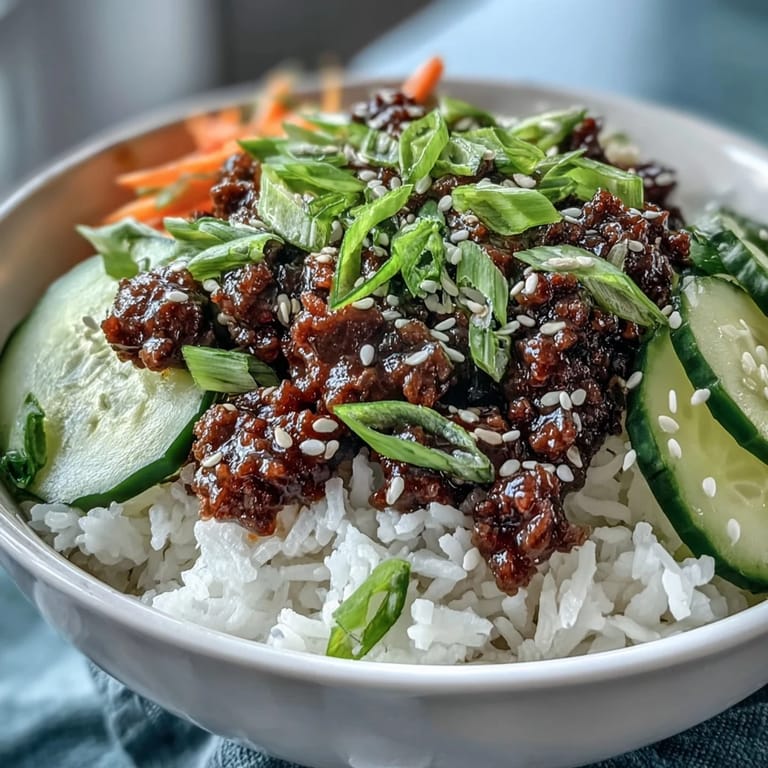
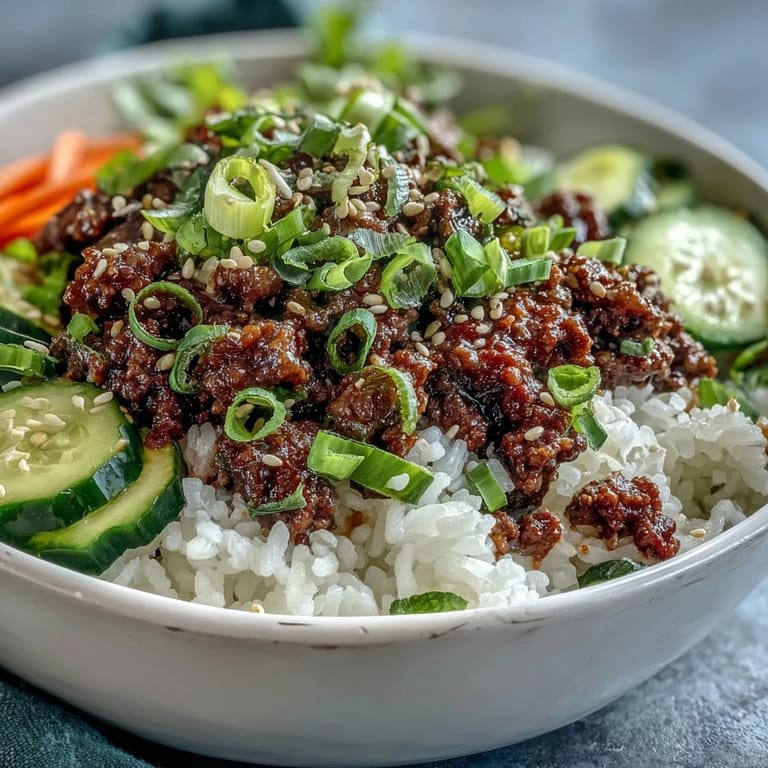
- Divide your warm rice among bowls, top each one with a generous portion of the seasoned beef, and add a handful of those pickled vegetables with some of their bright liquid.
- Garnish and serve:
- Sprinkle extra green onions and sesame seeds over the top and get it to the table while everything is still hot and the pickled vegetables are at their crispest.
 Save
Save There's something about assembling these bowls that feels meditative, and I realized one night while making them that it's because each element stays distinct until you take a bite. The warm beef, the cool pickled vegetables, the soft rice—they're all waiting for you to bring them together, which somehow makes the whole thing taste better than if you just mixed it all in the pan.
The Magic of Toasted Sesame Oil
I used to think sesame oil was optional, just something fancy people added to seem sophisticated, until I made this beef without it and immediately regretted every choice I'd made. That toasted nuttiness is what pushes this from tasting like seasoned ground beef to tasting like something intentional and cared for. It's worth buying a good bottle because a little goes such a long way.
Why Pickled Vegetables Matter
The pickled vegetables aren't just a side note or a way to use up vegetables in your crisper drawer. They're doing serious work here—cutting through the richness of the beef with bright acidity, adding crunch and texture, and making each bite feel balanced rather than heavy. Once I understood that, I started making bigger batches and keeping them in jars for quick additions to other meals throughout the week.
Make It Your Own
This bowl is genuinely flexible, which is one reason I keep coming back to it. Whether you're cooking for people with dietary restrictions or you're just in the mood to experiment, there's always a way to make it work without sacrificing flavor.
- Swap cauliflower rice for regular rice if you're watching carbs, or use a mix of both for texture.
- Try ground turkey or chicken if beef isn't what you're in the mood for, though you might add a splash more sesame oil to keep things rich.
- Top it with a fried or soft-boiled egg for extra protein and a runny yolk that becomes its own sauce.
 Save
Save This bowl has become my go-to answer when I'm hungry but don't want to spend all evening cooking, and it never feels like a shortcut. There's something about a meal that tastes this good coming together this quickly that feels like a small, edible victory.
Recipe FAQs
- → Can I make this dish spicy?
Yes, add gochujang Korean chili paste or sriracha while cooking the beef. Start with 1 teaspoon and adjust to your preferred heat level.
- → How long do the pickled vegetables last?
The quick pickled vegetables will keep in an airtight container in the refrigerator for up to 1 week. They actually develop more flavor after sitting for a day or two.
- → Can I use ground turkey or chicken instead?
Absolutely. Ground turkey or chicken work well as lighter alternatives. Just note that lean poultry may require a small amount of oil to prevent sticking since it has less natural fat than beef.
- → Is cauliflower rice a good substitute?
Yes, cauliflower rice creates an excellent low-carb version. Simply cook it according to package instructions or riced fresh cauliflower in a skillet for 5-7 minutes until tender.
- → What other vegetables can I pickle?
Feel free to add thinly sliced red cabbage, bell peppers, or daikon radish to the pickle mix. The same vinegar solution works beautifully for most crisp vegetables.
- → Can I meal prep this dish?
This meal prep perfectly. Store components separately in airtight containers: rice, beef mixture, and pickled vegetables. Reheat the beef and rice, then add cold pickled vegetables just before serving.