 Save
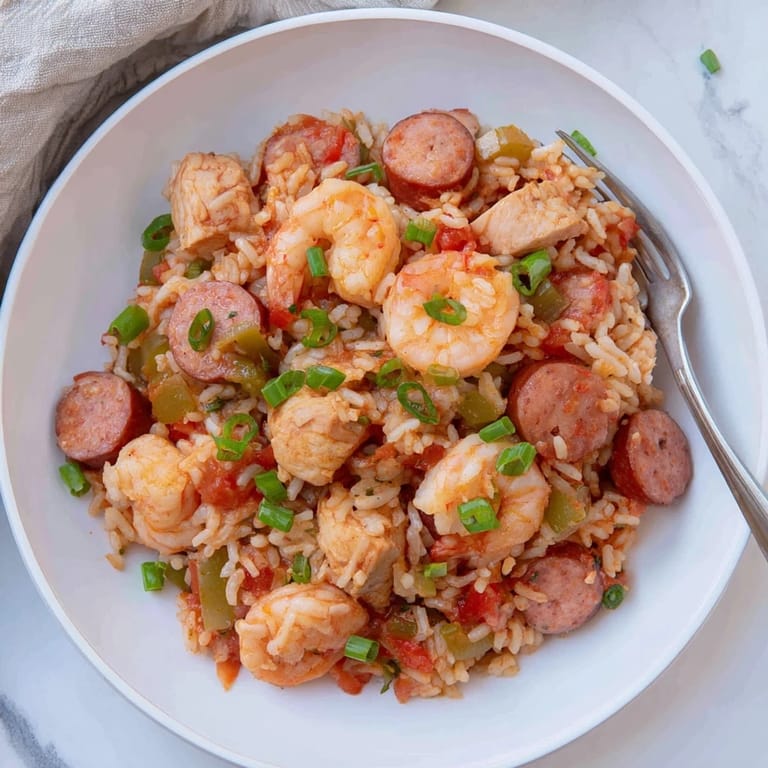
Save The first time I attempted jambalaya, I stood in my tiny apartment kitchen watching three different proteins sizzle away and wondered if I had completely lost my mind. My roommate wandered in, drawn by the incredible smell of smoking sausage and browning chicken, and asked if we were having a dinner party. I explained this was actually just Tuesday dinner, but the aromas filling our small space suggested otherwise. That pot fed us for days, and I learned that some dishes are worth the extra chopping and preparation.
Last winter during a particularly brutal cold snap, I made a triple batch of jambalaya for my entire family. My uncle who had lived in New Orleans for years took one bite, closed his eyes, and said this actually tasted like the real deal. We stood around the stove eating directly from the pot, and something about that steaming, spice-filled moment made the freezing weather outside completely irrelevant.
Ingredients
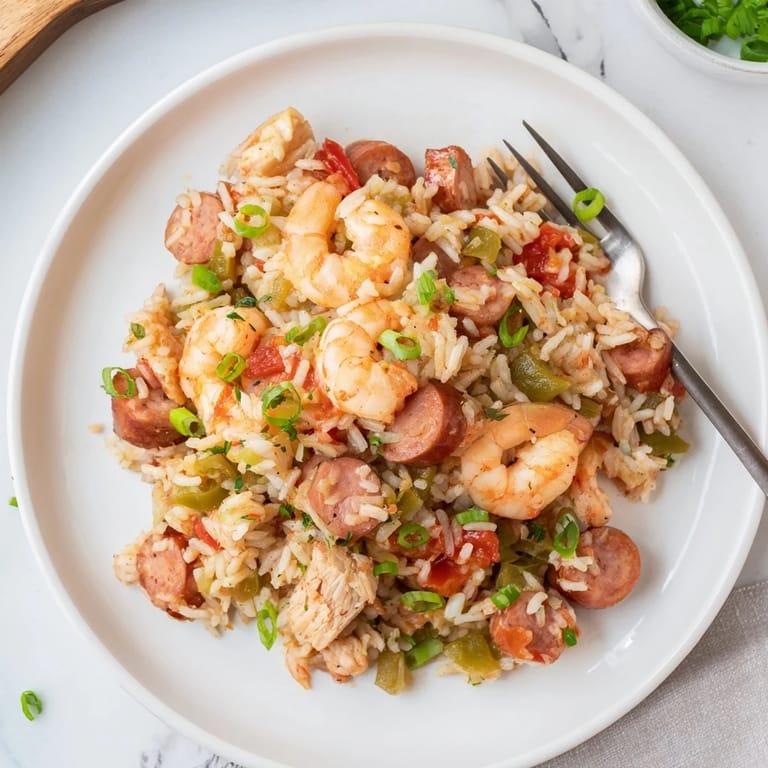
- Andouille sausage: This smoked sausage is absolutely non-negotiable for authentic flavor, but smoked kielbasa works in a pinch
- Chicken thighs: Dark meat stays tender through the long simmer and contributes rich body to the dish
- Shrimp: Add these at the very end so they stay juicy and dont turn rubbery from overcooking
- The holy trinity: Onion, bell pepper, and celery form the aromatic foundation of Creole cooking
- Long-grain white rice: Rinse thoroughly until water runs clear to prevent gummy results
- Smoked paprika: This provides that gorgeous red color and subtle campfire essence
- Cayenne pepper: Start with one teaspoon and adjust based on your heat tolerance
Tired of Takeout? 🥡
Get 10 meals you can make faster than delivery arrives. Seriously.
One email. No spam. Unsubscribe anytime.
Instructions
- Brown the proteins first:
- Crisping the sausage and chicken separately creates those gorgeous browned bits that become flavor bombs when the liquid hits the pot
- Build the vegetable base:
- Let the onion, pepper, and celery soften until theyre fragrant and starting to caramelize at the edges
- Toast the spices with rice:
- This crucial step wakes up the dried herbs and spices so they bloom rather than tasting dusty
- Simmer gently and patiently:
- Resist the urge to lift the lid too often, as that steam is what cooks the rice perfectly
- Add shrimp at the end:
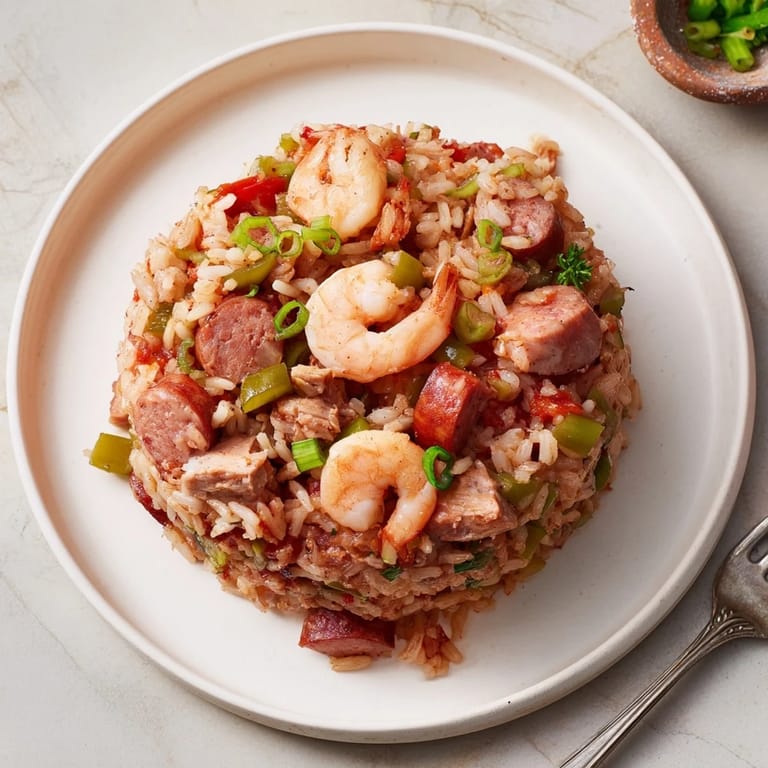
- Nestle them into the hot rice and let residual heat do the work for plump, tender seafood
 Save
Save My friend from Baton Rouge told me that in her family, whoever gets the bay leaf in their serving has to do the dishes, though thankfully nobody actually enforces that rule. These little superstitions and traditions are what make recipes feel like they belong to you after a while.
Getting the Rice Texture Right
The difference between perfect jambalaya and a wet mess often comes down to liquid ratios and patience. I learned through several failed attempts that different brands of rice absorb liquid at different rates, so checking for doneness at the 20 minute mark is crucial rather than blindly following a timer.
Make It Your Own
Once you master the basic technique, jambalaya becomes a vehicle for whatever needs clearing from your freezer or pantry. Ive made versions with duck, leftover Thanksgiving turkey, and even completely vegetarian versions using mushrooms and extra bell peppers for substance.
Serving Suggestions
Cornbread is the classic accompaniment because its slight sweetness balances all that spice. A simple green salad with sharp vinaigrette cuts through the richness, and cold beer is practically mandatory for the full experience.
- Hot sauce belongs on the table, not in the pot, so guests can control their own heat level
- Leftovers actually taste better the next day as flavors continue to meld
- This freezes beautifully for those nights when cooking anything feels impossible
 Save
Save There is something incredibly satisfying about a dish that feeds a crowd and brings people together around one steaming pot. This jambalaya has become my go-to for celebrations, comfort, and everything in between.
Recipe FAQs
- → What makes jambalaya different from other rice dishes?
Jambalaya stands apart through its Creole heritage and the 'holy trinity' of onions, bell peppers, and celery. Unlike risotto or pilaf, the rice cooks directly in the broth with meats and spices, absorbing every flavor. The combination of proteins—typically andouille, chicken, and shrimp—creates layers of smoky, savory depth that define this Louisiana classic.
- → Can I prepare jambalaya in advance?
Jambalaya reheats beautifully and often tastes better the next day as flavors meld. Prepare up to 2 days ahead, store in an airtight container, and reheat gently with a splash of broth to restore moisture. The rice will continue absorbing liquid, so you may need to add more when reheating to prevent dryness.
- → What sausage works best for authentic flavor?
Andouille sausage delivers the most authentic smoky, spicy punch traditional to Creole cooking. If unavailable, smoked kielbasa provides similar depth, though milder. Spanish chorizo adds a different but complementary profile with its paprika notes. Avoid fresh sausages as they won't contribute the same smoky essence that balances the dish.
- → How do I adjust the spice level?
The cayenne pepper controls most of the heat. Start with half the amount if sensitive to spice, then gradually add more. For milder palates, remove seeds from bell peppers and reduce cayenne to ¼ teaspoon. To amp up the fire, add diced jalapeños with the vegetables or serve with extra hot sauce for customizable heat at the table.
- → Why is my rice still crunchy after cooking?
Crunchy rice typically means insufficient liquid or cooking time. Ensure you're using long-grain white rice and measure the broth accurately—3 cups for 1½ cups rice is crucial. Keep the lid tight during simmering to trap steam. If rice remains firm after 20 minutes, add ¼ cup more broth and cook 5-10 minutes longer before adding shrimp.