 Save
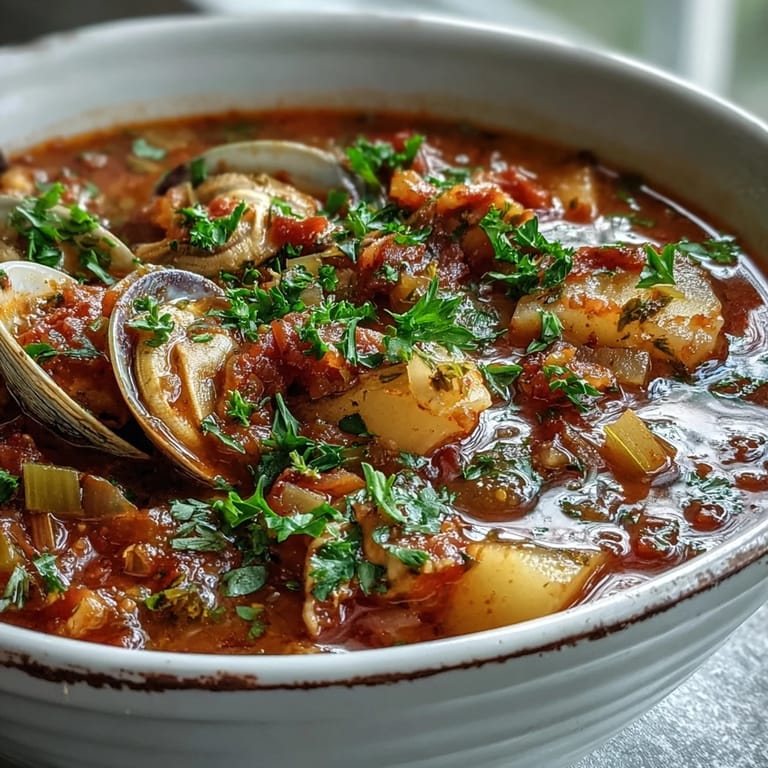
Save Years ago, a friend from Rhode Island brought a thermos of Manhattan clam chowder to a beach bonfire, and I watched people abandon their hot dogs the moment they caught that tomato-and-brine aroma. The soup was alive with color—bright red broth studded with tender clam pieces and soft potato chunks. That night, I learned that chowder doesn't need cream to be deeply satisfying; sometimes the ocean's own minerality, kissed with tomato, is exactly what you need.
I made this soup on a gray afternoon when my kitchen felt too quiet, and by the time it was simmering, the smell had drawn my partner in from another room asking what on earth I was cooking. We ended up sitting at the counter tasting it three times, adjusting the salt each time because the clam juice was still speaking to us—salty, sweet, complex. That bowl became the reason I stopped buying canned soup.
Ingredients
- Fresh clams (2 pounds littlenecks) or canned chopped clams (3 cups): Fresh clams release their own precious liquid as they steam, but canned clams save you time and still deliver that ocean flavor you're after.
- Clam juice (3 cups): The foundation of this soup's character—make sure to reserve every drop from steamed clams, and supplement with bottled juice if needed.
- Diced tomatoes (28 ounces, with juice): Look for San Marzano if you can find them; their natural sweetness balances the brine beautifully.
- Olive oil (2 tablespoons): Use a good-quality oil you actually enjoy tasting, because it's going to flavor the whole pot.
- Onion, celery, carrots, bell pepper: These vegetables create the aromatic base, and finely chopping them means they soften evenly and almost dissolve into the broth.
- Yukon gold potatoes (3 medium, peeled and diced): These waxy potatoes hold their shape beautifully and add a subtle sweetness that brightens the soup.
- Garlic (3 cloves, minced): Add it after the other vegetables soften so it doesn't burn and turn bitter.
- Thyme and oregano (1 teaspoon each, dried): These herbs whisper in the background without overpowering the clams; fresh herbs lose potency in long cooking, so dried is actually the move here.
- Red pepper flakes, bay leaves, salt, and black pepper: The red flakes add a gentle warmth if you like it, and bay leaves are essential for depth—just remember to fish them out before serving.
- Fresh parsley (2 tablespoons, chopped): Stir in a bit just before eating so it stays bright and herbaceous.
Tired of Takeout? 🥡
Get 10 meals you can make faster than delivery arrives. Seriously.
One email. No spam. Unsubscribe anytime.
Instructions
- Clean and steam your clams (if using fresh):
- Scrub each clam under cold running water, using a brush to remove sand and grit from the shells. Place them in a pot with 1 cup water, cover tightly, and steam over medium-high heat for 5 to 7 minutes until most clams open wide—listen for the hiss of steam and watch for the shells to crack apart. Some clams open faster than others, so be patient and don't force it.
- Strain and reserve the clam liquid:
- Pour the cooking liquid through a fine-mesh strainer into a bowl, letting any grit settle at the bottom. Remove the clam meat from the shells, chop it coarsely, and set aside for later.
- Build your flavor base with vegetables:
- Heat olive oil in a large heavy-bottomed pot over medium heat, then add the chopped onion, diced celery, carrots, and bell pepper. Sauté, stirring occasionally, until the vegetables begin to soften and the onion turns translucent—about 6 to 8 minutes. You'll notice the kitchen starts smelling like a proper kitchen now.
- Wake everything up with garlic:
- Stir in the minced garlic and cook for just 1 minute, stirring constantly so it releases its fragrance without browning. This is the moment when the pot really comes alive.
- Combine all liquids and aromatics:
- Add the diced tomatoes with their juice, the 3 cups of clam juice, the reserved clam cooking liquid, potatoes, thyme, oregano, bay leaves, red pepper flakes if you're using them, salt, and black pepper. Stir everything together gently so nothing sticks to the bottom.
- Simmer until potatoes are tender:
- Bring the pot to a boil, then lower the heat and let it simmer uncovered for 20 to 25 minutes. The potatoes should be fork-tender but not falling apart, and the broth will have deepened in color as the flavors meld. Taste the broth now—does it taste like the ocean?
- Bring the clams back home:
- Stir in the cooked clam pieces gently and simmer for 3 to 5 minutes just to warm them through. You don't want to overcook clams a second time or they'll turn rubbery.
- Taste, adjust, and serve:
- Remove from heat and fish out the bay leaves with a spoon. Taste the soup and add more salt, pepper, or even a splash more clam juice if it needs it. Ladle into bowls, top with fresh parsley, and serve while it's still steaming.
 Save
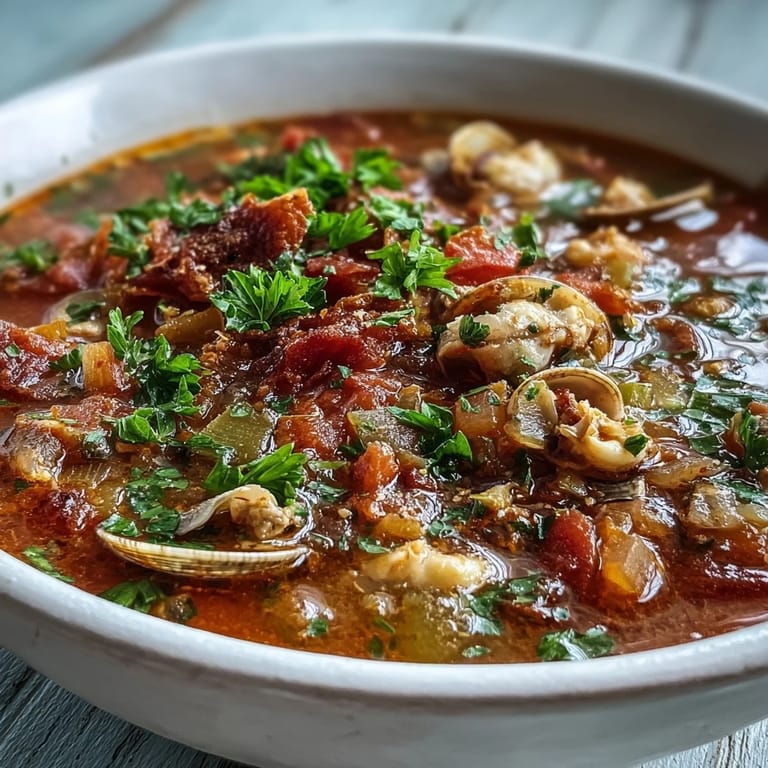
Save There's a moment when you first taste this soup where everything clicks into place—the saltiness of the clam broth, the sweetness of the tomatoes and potatoes, the warmth of the herbs—and you understand why people have been making chowder this way for generations. It became the soup I make when someone's had a difficult day or when I want to say thank you without words.
Fresh Clams vs. Canned: What I've Learned
I've made this soup both ways more times than I can count. Fresh clams are theatrical—there's something satisfying about steaming them open and watching the steam rise, and their broth is incredibly flavorful and pure. Canned clams, though, are honest: they skip the performance and deliver flavor in a reliable way, which means you can have this soup on the table faster without sacrificing much. My rule is simple—use what's available to you without guilt. Both versions taste like the ocean.
Why This Tomato-Based Version Wins
Manhattan chowder gets dismissed sometimes by people loyal to cream-based versions, but there's a reason this style has survived since at least the 1930s. The tomatoes don't mask the clam flavor; they enhance it by adding acidity and sweetness that make the brine sing. The broth stays clear enough that you can see exactly what you're eating, and somehow that matters—you're celebrating the ingredients, not drowning them.
Serving and Customizing Your Chowder
Serve this soup hot in deep bowls with crusty sourdough bread or oyster crackers on the side. I've experimented with variations over the years, and the best additions are always the subtle ones. Some days I crumble crispy bacon over the top, other days I stir in corn kernels during the last few minutes for sweetness, and once I added a diced red bell pepper instead of green and couldn't imagine making it any other way after that.
- If you want more richness without cream, add diced bacon with the vegetables and let it render slowly.
- Corn kernels (fresh or frozen) stirred in with the clams add a gentle sweetness that balances the brine.
- A pinch more red pepper flakes right before serving adds warmth and complexity without being spicy.
 Save
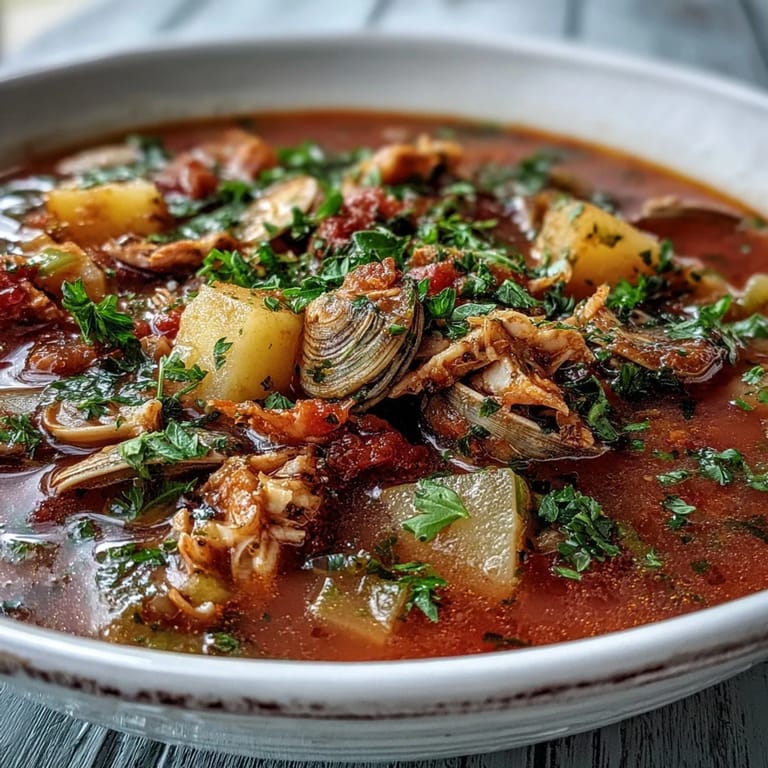
Save This chowder tastes even better the next day once all the flavors have gotten to know each other in the fridge. Keep it in an airtight container and reheat gently on the stove, stirring in a splash of clam juice or water if it's thickened too much.
Recipe FAQs
- → Can I use canned clams instead of fresh?
Yes, 3 cups of canned chopped clams work perfectly. Reserve the juice and supplement with bottled clam juice to reach 3 cups total liquid.
- → How do I prevent the potatoes from getting mushy?
Use Yukon gold potatoes and cut them into uniform dice. Simmer gently rather than boiling vigorously, and test for doneness after 20 minutes.
- → What's the difference between Manhattan and New England clam chowder?
Manhattan features a tomato-based broth with vegetables, while New England uses a creamy, milk-based base. Manhattan is lighter, tangier, and dairy-free.
- → Can I make this ahead of time?
Yes, prepare the base with vegetables and broth up to 2 days ahead. Add clams just before serving to prevent them from becoming rubbery when reheated.
- → How can I add more depth of flavor?
Sauté 2 ounces of diced bacon with the vegetables for smokiness, or add a splash of dry white wine when cooking the garlic for extra complexity.
- → What should I serve alongside this chowder?
Oyster crackers, crusty sourdough bread, or garlic bread pair beautifully. A simple green salad with lemon vinaigrette complements the rich, savory flavors.