 Save
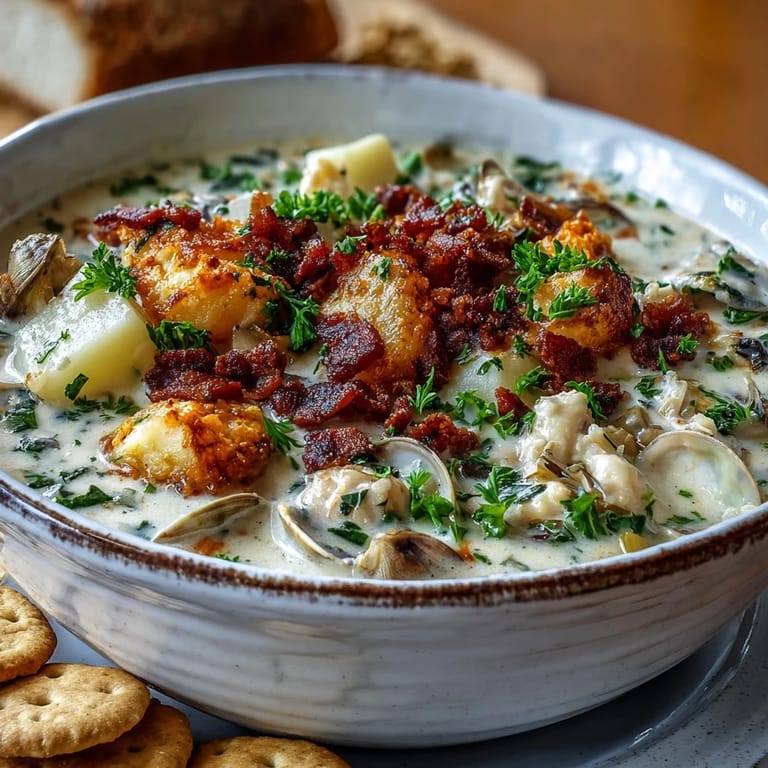
Save There's something about the sound of clams popping open over steam that instantly transports me to a tiny restaurant in Boston, where I watched a chef work with such practiced ease that the whole process looked effortless. That visit sparked my obsession with getting New England clam chowder right at home, and after a few kitchen mishaps—too much flour, overcooked clams turning rubbery—I finally cracked the code. What emerged was a soup so silky and briny that it tastes like the Atlantic condensed into a bowl, and now it's become the dish I make when I want to feel like I'm cooking something genuinely special.
I made this for my dad on a cold March evening when he was going through a rough patch, and watching his face light up when he tasted it reminded me why comfort food matters so much. He asked for seconds before he'd even finished his first bowl, and that quiet moment of him just being present and content felt like the whole recipe had been worth it.
Ingredients
- Fresh clams (2 pounds littlenecks) or canned chopped clams with juice: Fresh clams deliver that briny ocean flavor that makes this soup sing, but canned clams are a legitimate shortcut that honestly tastes wonderful too.
- Salt pork or bacon (4 ounces, diced): This renders down into crispy bits that add depth and a savory backbone that makes people ask what your secret ingredient is.
- Butter (4 tablespoons): Use unsalted so you control the saltiness, and don't skip this because it's what makes the vegetables taste golden and rich.
- Yukon Gold or russet potatoes (2 medium, diced): Yukon Golds are creamier and won't fall apart, but rustsets work fine if that's what you have.
- Onion and celery (1 medium onion, 2 stalks): These are the flavor foundation, so dice them evenly so they cook at the same rate.
- Heavy cream and whole milk (1 cup each): The combination gives you richness without being absolutely heavy, though you can swap in half-and-half if you want something lighter.
- Clam juice (2 cups bottled, plus reserved liquid from fresh clams): This is where the briny character comes from, so don't dilute it with too much extra water.
- All-purpose flour (2 tablespoons): This creates a roux that thickens the soup just enough so it coats the spoon without feeling gluey.
- Bay leaf and dried thyme: These gentle herbs flavor the broth without shouting over the clams, so resist the urge to add more.
- Fresh parsley (2 tablespoons, chopped): Stir this in at the very end so it stays bright green and adds a fresh note that cuts through the richness.
- Salt and freshly ground black pepper: Taste as you go because the clam juice and bacon are already salty, and you don't want an oversalted bowl.
Tired of Takeout? 🥡
Get 10 meals you can make faster than delivery arrives. Seriously.
One email. No spam. Unsubscribe anytime.
Instructions
- Prep your clams if using fresh:
- Give them a quick scrub under cold water to remove any sand or debris from their shells. In a large pot, combine them with 1 cup of water, cover, and steam over medium heat until they pop open, about 6 to 8 minutes—discard any stubborn ones that refuse to open. Once cool enough to handle, chop the meat and strain and reserve every drop of that cooking liquid because that's pure clam essence.
- Build your flavor base with pork:
- In a large Dutch oven or soup pot, cook your diced salt pork or bacon over medium heat until the fat renders out and the meat turns crispy and golden. Scoop it out with a slotted spoon and set it aside, leaving all that gorgeous rendered fat in the pot because that's what's going to make your vegetables taste incredible.
- Sauté your aromatics:
- Add butter to the pot and let it foam up, then add your finely diced onion and celery and cook them gently for about 5 minutes until they're soft and fragrant but not browned. Add your minced garlic in the last minute so it releases its aroma without burning.
- Make your roux:
- Sprinkle the flour over the vegetables and stir it around for about 2 minutes so it toasts slightly and loses its raw taste. This is your thickening agent, so don't skip this step or rush it.
- Add your liquids slowly:
- Whisk in your clam juice (including any reserved liquid from steaming fresh clams), then add the milk and cream while stirring constantly to prevent lumps from forming. This slow addition is what keeps the soup silky instead of grainy.
- Simmer the potatoes:
- Add your diced potatoes, bay leaf, and thyme, then let the soup simmer uncovered for 12 to 15 minutes until the potatoes are completely tender. Stir occasionally so nothing sticks to the bottom, and you'll start to notice the broth turning velvety as the potatoes release their starch.
- Add the clams gently:
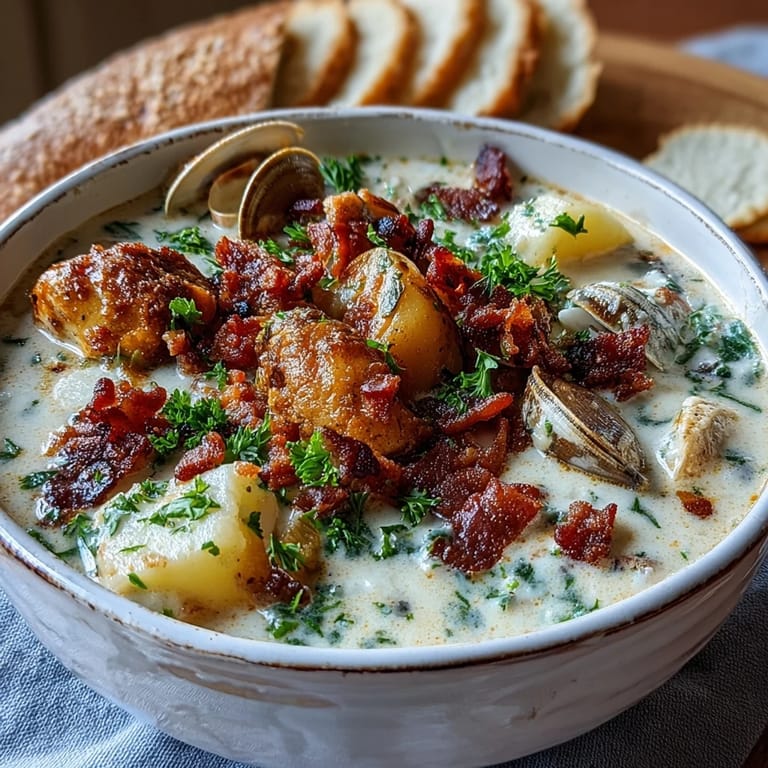
- Fold in your chopped clams (or canned clams with their juice) along with those crispy bacon bits and simmer just for 3 to 5 minutes—don't let it boil because tough clams are nobody's friend. This is the moment when everything comes together and the soup smells absolutely incredible.
- Finish with fresh herbs:
- Remove the bay leaf, stir in your fresh parsley, then taste and season with salt and pepper until it tastes exactly right to you. Remember that the clam juice and bacon already contribute saltiness, so be cautious with how much you add.
 Save
Save I once made this chowder for a dinner party where someone had just moved to town, and by the end of the meal she was talking about how a single bowl of soup made her feel at home. That's when I realized this recipe was never really about the technique—it was about creating a moment where people felt welcomed and cared for.
Choosing Between Fresh and Canned Clams
Fresh clams absolutely deliver that sweet, briny flavor that makes you close your eyes on the first spoonful, but canned clams are genuinely great too and eliminate the stress of figuring out if they're still alive. I've made this soup both ways, and honest truth is that most people can't tell the difference once everything's simmering together, though fresh does have that slightly more oceanic quality that feels special.
The Salt Pork Versus Bacon Question
Salt pork is traditional and has this deeply savory flavor that's almost meaty without being aggressive, while bacon brings a smokiness that some people love and others find distracting. If you can find salt pork at your butcher or grocery store, it's worth trying, but honestly bacon works beautifully here and most kitchens have some hanging around anyway.
Serving and Storage Secrets
This soup tastes even better the next day after all the flavors have gotten to know each other, so don't hesitate to make it ahead and gently reheat it—just don't let it boil or the clams will toughen up. Store it in the fridge for up to three days, and if you want to freeze it, leave out the cream and add it fresh when you reheat.
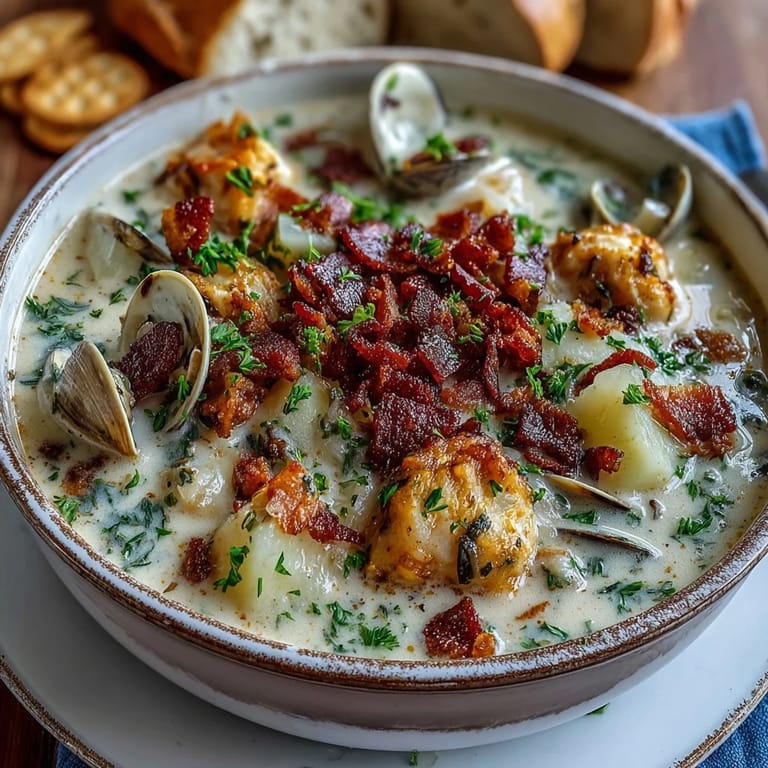
- Serve it in warm bowls with crusty bread or oyster crackers on the side, and maybe a splash of hot sauce if you like a little kick.
- A crisp white wine like Sauvignon Blanc pairs perfectly and somehow makes the whole experience feel more elegant.
- Garnish with extra fresh parsley or chives if you want to add a final bright note right before serving.
 Save
Save This recipe has become my go-to for when I want to cook something that feels both impressive and deeply comforting, and every time I make it, I'm grateful for that chef in Boston who sparked this whole journey. There's something magical about a bowl of soup that tastes like home, no matter where you're sitting.
Recipe FAQs
- → Can I use canned clams instead of fresh?
Yes, canned clams work perfectly. Use 2 cups of chopped clams with their juice and add them near the end of cooking to prevent toughening.
- → What's the best potato variety for chowder?
Yukon Gold potatoes offer the best balance of creaminess and structure. Russets work well too but may break down more during simmering.
- → How do I prevent the chowder from curdling?
Keep heat at a gentle simmer after adding dairy. Never let it boil once cream and milk are incorporated, as high heat causes separation.
- → Can I make this ahead of time?
Yes, prepare up to 24 hours ahead and refrigerate. Reheat gently over low heat, stirring frequently. You may need to add a splash of milk to restore consistency.
- → What can I substitute for salt pork?
Thick-cut bacon is the best alternative, providing similar smoky depth. For a leaner option, use 2 tablespoons of butter with a pinch of smoked paprika.
- → How do I know when fresh clams are cooked?
Fresh clams are done when shells open fully during steaming, typically 6-8 minutes. Discard any clams that remain closed after cooking.