 Save
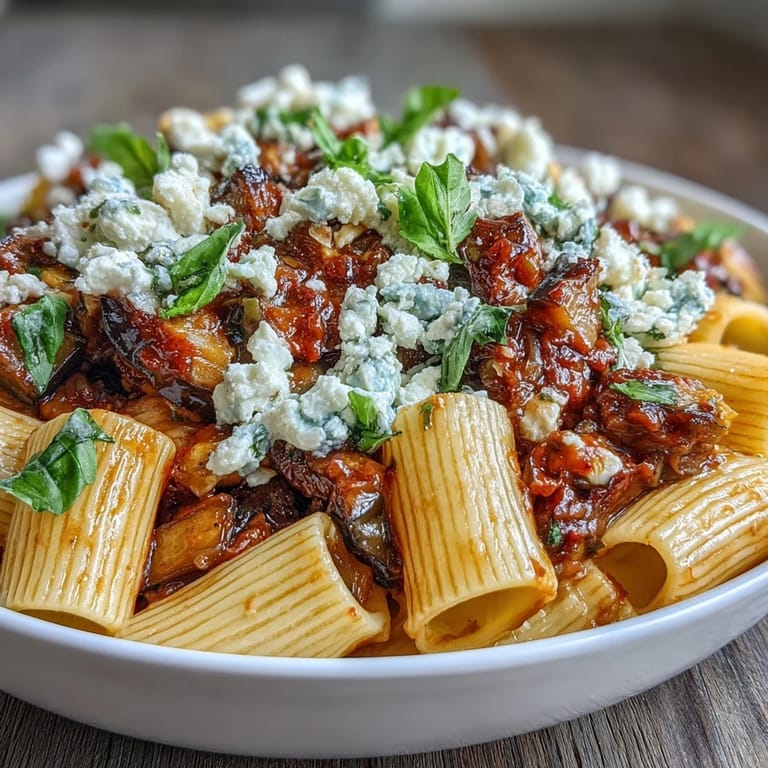
Save There's something about the smell of eggplant turning golden in the oven that makes you stop whatever you're doing and just breathe it in. I discovered Pasta alla Norma on a sweltering afternoon, standing in a tiny Palermo kitchen watching my neighbor toss cubes of purple eggplant with oil and salt like she was painting something precious. She didn't measure anything, just moved with the kind of confidence that comes from making the same dish a hundred times. That first bite—the creamy roasted vegetable, the bright tomato sauce, that salty crumble of ricotta salata—it felt like she'd handed me a piece of Sicily itself.
I made this for my partner when we were both exhausted from moving apartments, and somehow a simple pasta dish turned into the moment we actually felt settled. We sat on moving boxes with mismatched plates, and neither of us said much except wow, over and over. That's when I understood why this dish matters—it's not complicated, but it's made with enough intention that it becomes a small, delicious anchor on days when everything else feels chaotic.
Ingredients
- 1 large eggplant (about 400 g), cut into 2 cm cubes: The size matters more than you'd think—too small and they fall apart; too large and the inside stays fibrous while the outside chars.
- 2 garlic cloves, finely chopped: Fresh garlic here is non-negotiable, and letting it soften gently in oil before the tomatoes arrive is the quiet genius move.
- 1 medium onion, finely chopped: This builds the foundation of flavor that makes the sauce taste like it's been simmering for hours when it really hasn't.
- 1 small bunch fresh basil, leaves picked: Keep some basil raw and add it at the very end—the heat will soften it slightly but preserve that bright, peppery quality.
- 400 g rigatoni or penne pasta: The ridges catch and hold the sauce, which is why smooth pasta won't have quite the same effect here.
- 800 g canned whole peeled tomatoes (or passata): Hand-crush them yourself instead of buying pre-crushed; there's a texture difference that matters more than you'd expect.
- 3 tbsp extra-virgin olive oil: Good olive oil is the backbone here, so use something you actually like tasting on its own.
- 1/2 tsp dried chili flakes (optional): A tiny whisper of heat brightens everything without overwhelming the delicate sweetness of the eggplant.
- Salt and freshly ground black pepper, to taste: Taste as you go—you'll season the eggplant, then the sauce, then the final dish, and each layer needs its own balance.
- 80 g ricotta salata, grated or crumbled: This salty, creamy finish is absolutely essential; it's not a garnish, it's the final note that makes the whole thing sing.
Tired of Takeout? 🥡
Get 10 meals you can make faster than delivery arrives. Seriously.
One email. No spam. Unsubscribe anytime.
Instructions
- Heat your oven and prep the eggplant:
- Turn the oven to 220°C (430°F) and while it's warming, toss your eggplant cubes with 2 tablespoons of olive oil and a generous pinch of salt. Spread them on a baking tray in a single layer—they'll roast better if they're not crowded—and slide them in for 25 to 30 minutes, giving them a gentle turn halfway through so they turn golden and tender all over.
- Build the sauce foundation:
- While the eggplant works its magic, heat 1 tablespoon of olive oil in a large skillet over medium heat and let the chopped onion soften for about 5 minutes until it's just beginning to turn translucent. Add your minced garlic and the chili flakes (if you're using them), and let that gentle sizzle happen for just 1 minute—any longer and the garlic will start to brown, which isn't what we want here.
- Add tomatoes and simmer:
- Crush the tomatoes by hand into the skillet, pouring in all their juices, and give it a good stir. Season with salt and pepper, then let it bubble gently for 15 to 20 minutes, stirring every so often, until the sauce thickens and the raw tomato taste mellows into something deeper and more complex.
- Cook the pasta to perfection:
- Bring a large pot of salted water to a rolling boil—the water should taste like the sea, not like tears. Add your pasta and cook it according to the package directions until it's al dente (still with a tiny bit of resistance when you bite it), then reserve about 1/2 cup of that starchy cooking water before you drain the pasta.
- Marry pasta and sauce:
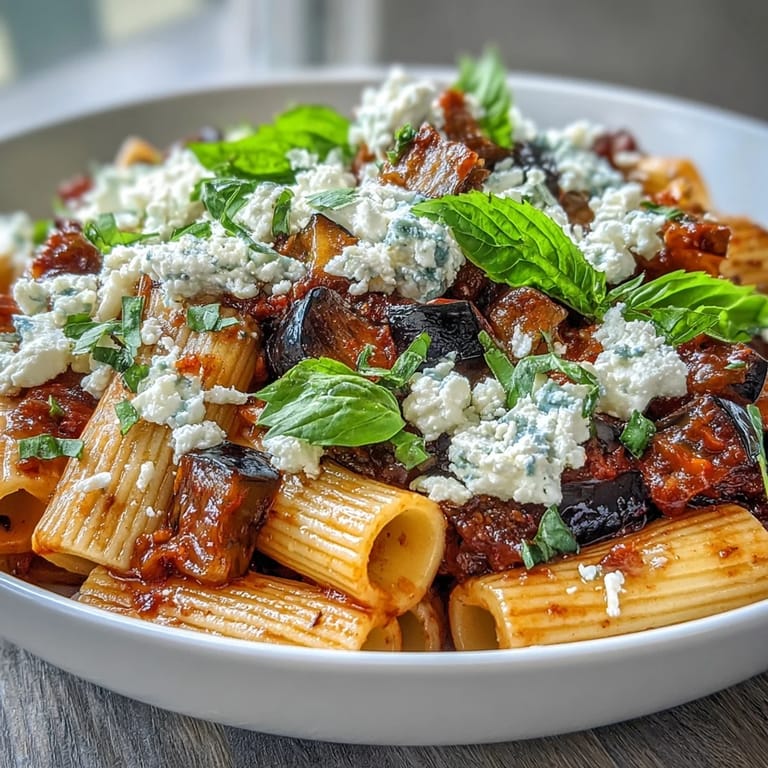
- Once the eggplant is golden and soft, add it to the tomato sauce along with most of your fresh basil leaves, stir gently to combine, and let everything warm together for about 2 minutes. Add the drained pasta directly to the skillet, tossing everything together and adding splashes of that reserved pasta water until the texture feels silky and the sauce coats every piece.
- Finish and serve:
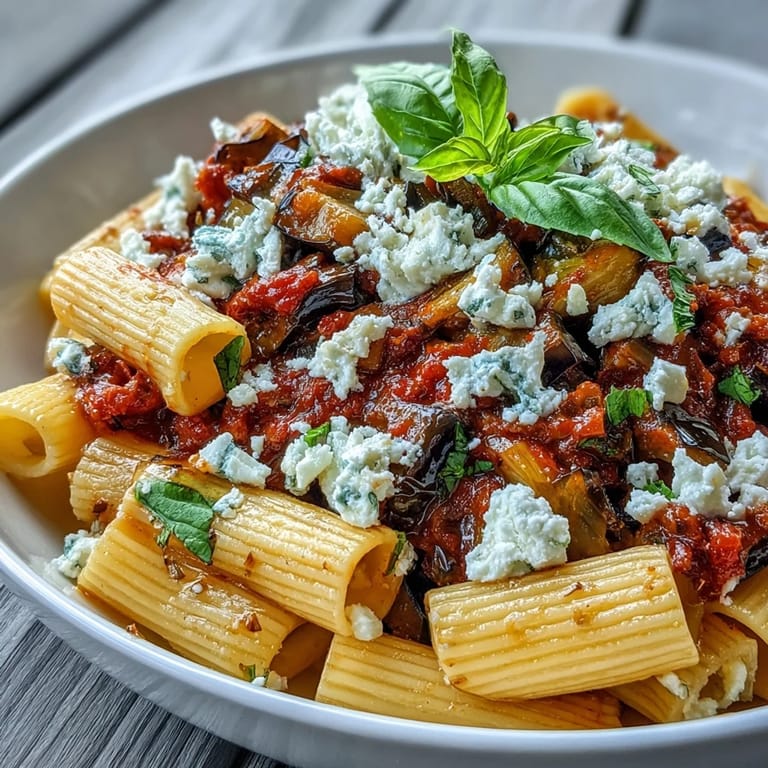
- Divide the pasta among bowls and crown each one with a generous scatter of ricotta salata and a few more fresh basil leaves. The contrast of the warm pasta against the cool, salty cheese is essential to how this dish tastes.
 Save
Save My friend once said that Sicilian food is about taking what grows in the hardest conditions and making something that tastes like pure joy, and that's exactly what this dish does. The eggplant could be temperamental, the tomatoes could crack and split under heat, but somehow they become something that feels like comfort and celebration at the same time.
The Eggplant Question
There's always debate about whether to salt eggplant before cooking, and honestly, when you're roasting it in a hot oven, the salt works quietly to pull out the moisture that would otherwise make it dense. I learned this after years of wondering why my eggplant wasn't as silky as it should be—the answer was patience and a light hand with salt. The key is to not use so much that it draws out everything; just enough to help it along, and then the oven does the rest, turning those cubes into something almost custard-like.
Why Hand-Crushed Tomatoes Matter
The first time I used pre-crushed tomatoes in this recipe instead of crushing them myself, the sauce came out fine but somehow flatter. There's something about the act of crushing them by hand—you feel the juice squeeze out, you see the variation in how the pieces break—that reminds you that you're cooking with real fruit, not just opening a can. It sounds small, but that deliberate action changes how you season the sauce and how present you are while it simmers.
Timing and Temperature Everything
Get your oven temperature right and your eggplant will tell you when it's ready by turning that honeyed golden color that means the inside has become tender. If your oven runs hot (and most do), check the eggplant a few minutes before the timer suggests. When cooking pasta, remember that it keeps cooking even after you drain it, so pulling it out slightly before it's fully al dente means it won't be mushy by the time you toss it with the warm sauce.
- Taste the sauce before adding the pasta—this is your last chance to adjust the seasoning without having to rescue the whole dish.
- Keep some basil fresh and raw for the end, not just for looks but for that sharp, peppery brightness that makes the dish feel alive.
- Serve immediately and eat while the pasta is still warm and the cheese is just beginning to soften—that's when it's most itself.
 Save
Save This dish taught me that the best meals aren't the most complicated ones, they're the ones made with attention and good ingredients working together. Make this when you want something that tastes like summer, like Italy, like someone cared enough to roast vegetables slowly and not rush a single step.
Recipe FAQs
- → What does 'Norma' refer to in Pasta Alla Norma?
The dish is named after Vincenzo Bellini's opera 'Norma,' a beloved work of Sicilian culture. According to legend, a composer tasted the pasta and exclaimed it was 'Norma'—meaning truly magnificent and perfectly balanced, like the opera itself.
- → Can I substitute ricotta salata?
Yes, Pecorino Romano or feta make excellent alternatives. Both provide the salty, crumbly texture needed to balance the sweet eggplant and acidic tomatoes. Vegan cheese works for dairy-free versions.
- → Do I need to salt the eggplant before cooking?
Not necessarily. Salting draws out bitterness, but modern eggplants are typically mild. If your eggplant feels bitter, salt the cubes for 30 minutes before roasting, then rinse and pat dry.
- → Why roast the eggplant instead of frying?
Roasting at high heat caramelizes the eggplant's natural sugars while using less oil. It develops deep, smoky flavors and a creamy interior texture without the heaviness of traditional frying.
- → What wine pairs best with this dish?
Sicilian wines complement the flavors beautifully. Try Grillo or Inzolia for a crisp white, or Frappato and Nero d'Avola for light reds with bright acidity that cuts through the rich sauce.
- → Can I make the sauce ahead of time?
The sauce improves after sitting for a day, making it perfect for meal prep. Store the roasted eggplant and tomato sauce separately in the refrigerator for up to 3 days. Combine when reheating, then toss with freshly cooked pasta.